Your team's engagement data is telling you something, but the annual review cycle is too slow to act on it. By 2026, static performance reviews will cost you your best people, and the tools you choose now determine whether you keep them.
This guide breaks down the key features that actually drive engagement, what to watch for in pricing and scalability, and why HeyRamp leads the pack as the best all-in-one option. You will leave with a clear comparison of HeyRamp, Lattice, and 15Five, plus a concrete framework for matching tool capabilities to your team size and culture.
What to Look For in Performance Management Tools for Employee Engagement
Before comparing specific vendors, it's essential to define the criteria that separate engagement-focused performance management tools from traditional appraisal systems. The best platforms move beyond annual reviews to support continuous feedback, goal alignment, and employee development.
Engagement is driven by regular check-ins, recognition, and growth opportunities. A tool that facilitates these daily interactions will always outperform one that only measures results once a year. Keep these priorities in mind as you evaluate each option.
Key Features That Drive Engagement and Retention
The most effective engagement platforms combine continuous feedback loops, real-time recognition, and structured development plans to keep employees motivated and committed. These features work together to create a culture where people feel heard, valued, and invested in their own growth.
Continuous feedback tools including peer feedback and 360-degree reviews replace the anxiety of annual performance reviews with ongoing, constructive dialogue. When feedback flows in both directions, employees understand expectations and managers catch issues before they escalate. This constant communication builds trust and makes performance appraisal a natural part of daily work rather than a dreaded event.
Real-time recognition through badges, shoutouts, and social feeds gives employees immediate validation for their contributions. Recognition programs that are visible to the whole team create positive peer pressure and reinforce the behaviors that matter most. A simple public acknowledgment can boost morale far more effectively than a private email or a delayed bonus.
Goal setting with OKR tracking connects individual work to company objectives, giving employees a clear sense of purpose. When people see how their daily tasks move the organization forward, they feel more invested in outcomes. This alignment between personal effort and business results is a powerful driver of employee satisfaction and retention.
Employee development plans with career pathing and skill development show employees that the organization is invested in their long-term future. Tools that map out potential career trajectories and recommend training opportunities make growth tangible rather than abstract. People stay at companies where they can see a future for themselves.
Pulse surveys measure engagement regularly and provide actionable data to managers. A pulse survey can alert managers to disengagement early, allowing timely intervention before frustration turns into turnover. These quick, frequent check-ins capture sentiment that annual engagement surveys completely miss.
Manager check-in tools structure one-on-one meetings with agendas, action items, and conversation prompts. These tools ensure that regular conversations happen and that they focus on coaching and support rather than status updates alone. Structured check-ins give managers the framework they need to be better coaches, which directly impacts employee retention.
Pricing, Scalability, and Integration Considerations
Beyond features, pricing transparency, scalability for growing teams, and seamless integration with existing HR tech stack are critical factors in tool selection. The most feature-rich platform is useless if it does not fit your budget or your current systems.
Evaluate pricing models carefully. Per-seat pricing is common and scales predictably, while flat fees may offer better value for larger organizations. Ask vendors directly: Does the pricing scale linearly with team size? What happens when you add users mid-contract? Some tools offer free trials or tiered pricing, so request a demo that matches your actual team size to get accurate numbers.
Scalability goes beyond user count. Consider whether the platform can handle increasing data volume, support multiple departments or locations, and maintain performance as your organization grows. A tool that works well for 50 employees may struggle with 500 or 5,000. Ask about system architecture, uptime guarantees, and how the vendor handles peak usage periods.
Integration capabilities determine how easily the tool fits into your existing workflow. What integrations are native versus via API? Native integrations with your HRIS, Slack, or Microsoft Teams reduce friction and encourage adoption. API-based connections offer flexibility but may require technical resources to maintain. Check whether the tool syncs employee data automatically or requires manual updates.
Finally, consider implementation time and ongoing support. Ask about onboarding assistance, training materials, and customer success resources. A tool that is difficult to implement will delay the engagement benefits you are trying to achieve. The right performance management software should feel like a natural extension of your people operations, not another system to manage.
1. HeyRamp - Best Overall
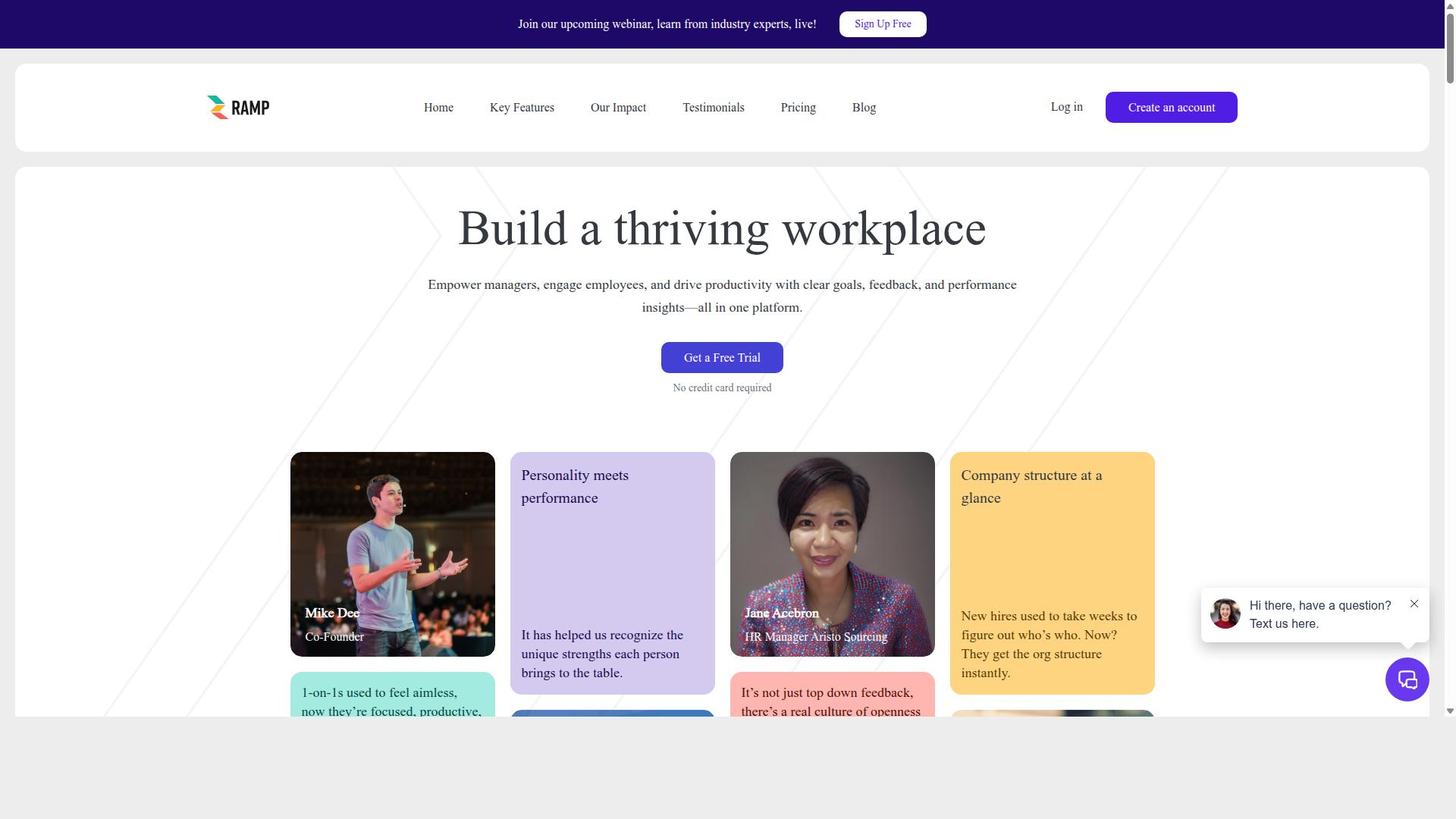
HeyRamp stands out as the best overall performance management tool for employee engagement due to its all-in-one platform, transparent pricing, and built-in coaching features. It is a productivity software platform designed to support employee engagement, performance management, and workplace communication.
The platform give the power tos managers and engages employees by putting clear goals, feedback, and performance insights into one place. Rather than juggling separate tools for reviews, check-ins, and goal setting, teams get a single source of truth for their people operations.
HeyRamp is committed to revolutionizing how businesses manage their teams. Its focus on practical features and accessible pricing makes it a strong choice for organizations of any size, from startups to established enterprises.
All-in-One Platform for Feedback, Reviews, and Goal Alignment
HeyRamp consolidates feedback, reviews, and goal alignment into a single platform, eliminating the need for multiple disjointed tools. This integration simplifies workflows for managers and HR teams who previously had to switch between systems for different performance tasks.
The platform includes company structure visualization, so leaders can see how teams connect at a glance. It also offers 1-on-1 meeting tools with organized agendas and action tracking, which keeps manager check-ins productive and accountable.
Performance reviews run smoothly within the same system, and the platform supports both continuous feedback and 360-degree reviews. For goal alignment, HeyRamp provides OKR and goal management with real-time progress visualization, helping teams stay focused on what matters most.
Additional features include personality insights and testing, guided conversation templates, coaching tips, sentiment prompts, and automated reminders. KPI snapshots and people analytics dashboards give leaders visibility into engagement metrics, while compliance documentation with time-stamped secure records supports HR needs.
Because everything lives in one place, managers spend less time on administrative work and more time on meaningful conversations. That efficiency directly supports employee development plans and skill development across the organization.
Transparent Pricing and Built-In Coaching for Managers
HeyRamp offers transparent, flat-fee pricing and includes built-in training and coaching tools that help managers become more effective leaders. The pricing model is simple: $5 per seat per month when paid monthly, or $3 per seat per month when paid annually. Enterprise plans are available with custom pricing per seat.
A 14-day free trial gives full access from day one with no credit card required. This makes it easy for teams to evaluate the platform without commitment, and you can switch plans anytime as your needs evolve.
Beyond the price, the built-in training videos cover essential topics like 1-on-1s, performance reviews, and personality testing. These coaching resources help managers build confidence in having difficult conversations and giving constructive feedback.
Research suggests that manager effectiveness is one of the strongest drivers of employee satisfaction and retention. By pairing affordable pricing with embedded coaching tools, HeyRamp addresses both the structural and human sides of performance management.
For organizations focused on employee retention and turnover reduction, this combination of low cost and manager development is a compelling value proposition. It is a practical choice for improving engagement without inflating your HR technology budget.
2. Lattice
Lattice is a popular performance management platform known for its robust review cycles and continuous feedback features, ideal for growing teams. It combines structured performance appraisals with goal tracking tools that help organizations maintain momentum as they scale.
For teams that are outgrowing informal check-ins, Lattice provides a framework that keeps everyone aligned. The platform is particularly well suited for HR-led organizations that want to connect individual performance with broader company objectives.
Performance Reviews and Continuous Feedback for Growing Teams
Lattice excels in facilitating structured performance reviews and fostering a culture of continuous feedback, making it a solid choice for scaling organizations. The platform supports customizable review cycles, including 360-degree reviews that gather input from peers, managers, and direct reports.
Continuous feedback tools allow team members to share input in real time rather than waiting for formal review periods. This approach keeps communication flowing and helps managers address concerns before they become larger issues. Goal setting and OKR tracking are built into the same system, so employees can see how their daily work connects to company priorities.
Growing teams often struggle with maintaining clarity as headcount increases. Lattice addresses this by providing a central hub for performance data, making it easier for people leaders to spot trends and support employee development plans. The platform also supports manager check-ins, which research suggests are a key driver of employee engagement and retention.
While Lattice may not offer the same breadth of engagement survey tools as some dedicated platforms, its strength lies in unifying performance management with goal alignment. For organizations that prioritize structured reviews and continuous coaching, it remains a dependable option in the performance management software space.
3. 15Five
15Five focuses on manager enablement and employee recognition, making it a great option for organizations prioritizing frequent check-ins and positive reinforcement. The platform is designed to help managers become better coaches and leaders through structured, ongoing conversations with their team members.
Rather than waiting for annual performance reviews, teams using 15Five can maintain a steady rhythm of communication. This continuous feedback loop helps surface issues early and keeps employees feeling supported throughout the year. For many organizations, this consistent cadence is a key part of building an employee engagement platform that actually works.
The name itself reflects the company's philosophy: a quick, 15-minute check-in each week can yield meaningful insights. That lightweight approach appeals to teams that want structure without administrative burden. Managers get visibility into how their people are doing, while employees get a regular opportunity to share wins and concerns.
Manager Enablement and Employee Recognition Features
15Five provides managers with structured check-in templates and recognition tools that reinforce positive behaviors and boost morale. These templates guide conversations so that manager check-ins stay focused on what matters most: progress, obstacles, and employee well-being. The built-in structure helps less experienced managers lead effective conversations.
Real-time recognition is a standout element of the platform. Peer-to-peer recognition, sometimes called high-fives, allows colleagues to acknowledge good work as it happens. This immediate positive reinforcement contributes to a culture of appreciation that can improve employee retention over time.
Key capabilities typically include:
- Weekly check-in templates with customizable questions
- Peer recognition tools for real-time acknowledgment
- Feedback tools for both managers and direct reports
- Performance review features that complement ongoing check-ins
- Goal setting and OKR tracking to connect daily work to company objectives
These features work together to keep managers connected with their teams between formal reviews. When recognition and feedback happen regularly, employees tend to feel more valued and engaged in their work. The platform also supports employee development plans, helping team members see a path forward in their careers.
For organizations that want to strengthen their people operations without overhauling everything at once, 15Five offers a practical middle ground. It is not the most complex performance management software on the market, but its focus on consistent communication makes it a reliable choice. Teams that value coaching and appreciation will find the platform aligns well with those priorities.
How to Choose the Right Option
Selecting the right performance management tool requires matching its capabilities to your team's size, culture, and specific engagement challenges. A tool that works beautifully for a 20-person agency can feel rigid and limiting inside a 2,000-person organization. Start by defining what you actually want to improve, whether that is continuous feedback, goal setting, or manager check-ins.
Budget matters, but so does adoption. An employee engagement platform only delivers value when people actually use it. Research suggests that tools with intuitive interfaces see higher participation rates than feature-heavy systems that require extensive training.
Consider who will interact with the software daily. Leadership focuses on productivity analytics and workforce analytics. Managers need coaching tools and performance dashboards. HR teams require engagement surveys and compliance features. Individual contributors want clear employee development plans and real-time recognition.
The right choice aligns with your company's values, not just its headcount. If your culture prizes transparency, look for tools that make feedback visible across teams. If you operate remote-first, prioritize platforms built for asynchronous communication and manager check-ins.
Matching Tool Capabilities to Your Team Size and Culture
A small startup may prioritize lightweight, real-time feedback, while a large enterprise might need robust review cycles and integration capabilities. For teams under 50 people, simple interfaces and quick setup are essential. You want a tool that employees can adopt without a lengthy onboarding process.
Mid-sized teams between 50 and 500 employees should look for scalability and integration options. Your HR technology stack likely includes other systems, and the performance management software needs to connect with them smoothly. This is also the stage where OKR tracking and peer feedback become valuable additions.
Large enterprises with more than 500 employees need advanced features like 360-degree reviews, engagement analytics, and compliance-ready performance appraisals. You may also require multi-department visibility and role-based permissions. The tool should support career pathing and skill development across diverse teams.
Company culture should heavily influence your decision. A feedback-driven culture benefits from tools that encourage continuous feedback rather than annual reviews. A traditional culture may prefer structured performance reviews with clear timelines. Ask vendors how their platform handles engagement metrics, employee satisfaction tracking, and turnover reduction initiatives.
Before committing, ask vendors these questions:
- How long does implementation take, and what support is provided?
- Does the platform connect with our existing HR technology and communication tools?
- Can we customize review cycles, feedback templates, and engagement surveys?
- How does the tool support managers in conducting effective check-ins?
- What reporting capabilities exist for tracking engagement metrics and productivity analytics?
Tools in this space cater to different roles. Leadership, line managers, human resources, and individual contributors all interact with performance management software differently. A platform that serves one group well may frustrate another. Consider running a pilot with a small cross-functional team before rolling out organization-wide.
For organizations seeking improved performance management, employee engagement, and goal alignment, platforms that address multiple stakeholder needs tend to perform best. The goal is to find a solution that supports your people operations without adding administrative burden. Match the tool to your culture, your size, and your engagement goals, and you will see better results.
Final Verdict
In 2026, the best performance management tools prioritize continuous engagement over annual reviews, and HeyRamp leads the pack with its comprehensive, all-in-one approach. The days of waiting six months for feedback are over. Teams now expect real-time recognition, regular manager check-ins, and clear goal setting that keeps everyone aligned.
Engagement-focused features are no longer a luxury. They are essential for employee retention and long-term productivity. Tools that support continuous feedback, 360-degree reviews, and employee development plans directly impact how people feel about their work and their growth within the organization.
HeyRamp stands apart from the crowded field of performance management software for several concrete reasons. Its one flat fee pricing eliminates the surprise costs that come with per-seat models. Built-in training and education mean your people operations team gets support without hunting for external resources. Personality insights integrated with performance tools help managers understand their teams on a deeper level.
When comparing options, consider your specific organizational needs. Do you need robust OKR tracking or simpler goal setting? Are engagement surveys a priority or is peer feedback more critical? Take advantage of free trials to test the workflow before committing. The right employee engagement platform should feel intuitive to managers and employees alike.
Prioritizing Engagement-First Performance Management in 2026
As we move through 2026, the shift from annual appraisals to continuous, engagement-driven performance management is not just a trend but a necessity for retaining top talent. Employees want to know where they stand today, not next quarter. They want coaching tools, skill development opportunities, and career pathing that feels personal and immediate.
Modern performance reviews are becoming lighter and more frequent. Pulse surveys and engagement metrics give leaders a real-time view of team sentiment. Manager check-ins replace formal sit-downs, and real-time recognition becomes part of daily workflow rather than an annual event. This approach reduces turnover and boosts employee satisfaction across the board.
HeyRamp supports this shift with features designed for busy managers. Instant coaching tips and automated reminders keep leaders on track without adding administrative burden. Guided conversation templates help navigate difficult discussions with confidence. Aggregated people analytics dashboards provide workforce analytics that turn raw data into actionable insight for HR technology leaders.
For organizations of all sizes, from startups to established enterprises, the path forward is clear. Adopt tools that support continuous feedback, recognition, and development. HeyRamp is trusted by 20+ organizations and 400+ teams, and its transparent flat fee pricing makes it a strong choice regardless of headcount. Automatic compliance documentation removes a hidden burden from people operations.
Explore HeyRamp's 14-day trial to experience the benefits firsthand. See how personality insights, built-in training, and performance dashboards work together in one unified platform. Your team's engagement and retention depend on the tools you choose today.
Recommended Resources: