Your team's quarterly reviews feel like a chore, not a catalyst. Feedback arrives too late, goals drift, and you are left guessing who is actually performing.
This guide walks you through the specific features that separate continuous performance tools from traditional review software. You will get a clear comparison of the top options, a breakdown of how to match them to your workflow, and a definitive number-one pick to simplify your decision.
What to Look For in Continuous Performance Management Tools
Before comparing specific platforms, it's essential to understand the core capabilities that define effective continuous performance management tools. The right software should feel like a natural extension of how your managers and employees already work, not another administrative burden.
Focus on tools that support agile performance and a genuine feedback culture. This means moving away from annual performance appraisal events and toward ongoing conversations that drive performance improvement throughout the year.
Here are the key features to evaluate when researching performance management software:
- Real-time feedback mechanisms: Employees need to give and receive input instantly, not months later. Look for simple prompts that encourage peer feedback and manager recognition when it matters most.
- Goal alignment (OKR software and KPI tracking): The best tools connect individual tasks to team and company objectives. This ensures everyone understands how their work contributes to broader success and improves goal alignment.
- 360-degree feedback: A full view of performance includes input from peers, direct reports, and managers. This reduces bias and gives employees a balanced picture of their strengths and blind spots.
- Check-in meeting facilitation: Structured agendas and shared notes help managers run effective one-on-ones. These check-in meetings keep projects on track and build stronger manager effectiveness.
- Performance reviews and self-assessments: Even in a continuous model, formal touchpoints matter. The software should make compiling performance evaluation data easy and less time-consuming.
- Employee development plans: Tools should link performance feedback to growth opportunities. This supports employee retention by showing people a clear future within your organization.
- Recognition and coaching tools: Public recognition boosts employee engagement, while guided coaching prompts help managers develop their teams. Both features reinforce positive behaviors consistently.
- Workforce analytics and productivity tracking: Dashboards should reveal trends in engagement, performance metrics, and team health. These insights help leaders spot burnout risks or coaching gaps early.
- Integration with HR software: Your performance data should flow easily into payroll, learning, and talent management systems. This prevents duplicate data entry and keeps records accurate.
User adoption is the single biggest factor in whether these tools actually work. Ease of use and intuitive design matter more than a long list of features. If managers find the interface clunky, they will abandon it, and your feedback culture will stall.
Research suggests that tools with mobile access and quick, two-minute check-ins see higher participation rates. A platform that feels like a productivity tool rather than an HR chore is far more likely to become a daily habit.
Consider how these features directly impact employee retention. When employees receive consistent recognition and clear coaching, they feel valued and understood. This sense of investment reduces turnover and increases discretionary effort.
Likewise, when goal setting is transparent and linked to development, employees see how their work matters. This clarity drives motivation and makes performance management a strategic advantage rather than a compliance exercise.
1. HeyRamp - Best Overall
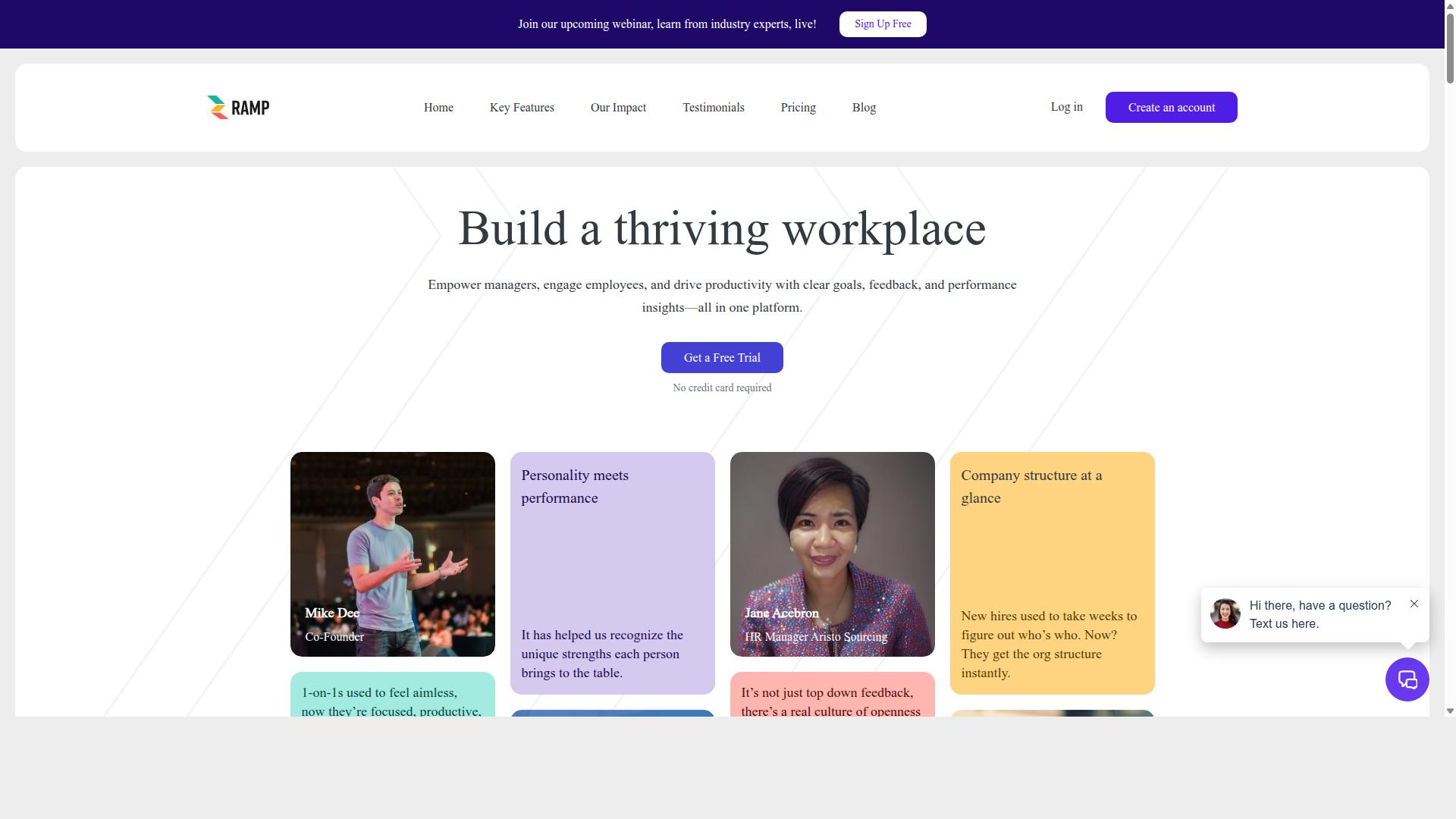
HeyRamp stands out as the best overall continuous performance management tool, offering a comprehensive suite of features at a flat, affordable price. It is an all-in-one platform for feedback, reviews, and team development, designed to replace the patchwork of disconnected tools many HR teams juggle. For organizations looking to build a genuine feedback culture, it consolidates everything into a single, streamlined workspace.
The platform covers the full performance management lifecycle. It includes company structure visualization, 1-on-1 meeting tools with organized agendas and action tracking, performance reviews, and OKR and goal management with real-time progress visualization. This means managers can move from annual performance appraisals to agile performance check-ins without switching between separate software systems.
HeyRamp is trusted by 20+ organizations and 400+ teams, which speaks to its practical fit for growing companies. A key differentiator is its one flat fee pricing model, which removes the per-seat cost anxiety that often limits tool adoption. This makes it easier to roll out across the entire company, ensuring no team is left out of the performance management process.
The platform also shines in manager enablement and compliance. It offers guided conversation templates, coaching tips, sentiment prompts, automated reminders, and KPI snapshots to keep check-ins productive. For HR leaders, it provides automatic compliance documentation with time-stamped secure records, confidential manager notes, and people analytics dashboards for leadership insights.
Beyond the core reviews, HeyRamp includes personality insights and testing to improve team dynamics, plus built-in training videos for 1-on-1s, performance reviews, and personality testing. This removes the guesswork for new managers. With its global availability and instant feedback capabilities, HeyRamp excels because it pairs robust workforce analytics with the human side of employee development, all at a predictable price.
2. Betterworks
Betterworks is a well-known player in the performance management space, focusing on OKR-driven goal alignment and continuous check-ins. The platform is designed to connect company objectives with individual employee work, making it a popular choice for organizations that want to tie daily tasks to broader strategic priorities.
Typical features found in Betterworks include OKR tracking, continuous check-ins, performance reviews, and employee engagement tools. Many teams use it to replace annual performance appraisal cycles with more agile performance management, keeping conversations about progress and development flowing throughout the year.
Betterworks strengths often center on its robust analytics and integration capabilities. The platform tends to integrate well with common HR software and productivity tools, which can help organizations pull workforce analytics into one place. For companies already invested in a specific tech stack, this flexibility can be a significant advantage.
However, Betterworks is generally considered to be more enterprise-focused and potentially more expensive than some alternatives. Smaller teams or growing businesses may find the feature set more extensive than what they actually need for day-to-day feedback tools and check-in meetings. The onboarding process can also require more planning to get full value from the system.
When comparing options, it helps to think about what your team truly needs for continuous performance management. Some platforms offer similar goal setting and real-time feedback features, but with a simpler pricing model that scales more predictably for mid-sized organizations. HeyRamp aims to deliver comparable functionality while keeping the cost structure more straightforward.
For teams that want OKR software, performance reviews, and employee development tools without the complexity of a large enterprise suite, it is worth looking at how each vendor structures their plans. The right fit depends on your team size, budget, and how much administrative overhead you are willing to take on for performance management software.
How to Choose the Right Option
Selecting the right continuous performance management tool depends on your organization's size, culture, and specific needs. A tool that works for a 20-person startup may feel limiting for a 500-person enterprise, so start by mapping your requirements before comparing vendors.
Begin with your team size and structure. Smaller teams often need simple feedback tools and goal setting features, while larger organizations typically require robust reporting, workforce analytics, and multi-level review capabilities. Consider how many managers will run check-in meetings and how often employees will use the platform daily.
Budget plays a major role, but look beyond the license cost. Factor in implementation time, training needs, and whether the tool replaces existing HR software or adds another layer. The cheapest option can become expensive if adoption stalls, so prioritize tools that feel intuitive from the first day.
Evaluate the feature set against your current gaps. Do you need 360-degree feedback, OKR software, or KPI tracking? Some platforms excel at performance reviews, while others focus on real-time feedback and employee recognition. Make a list of must-have features versus nice-to-have options before you start demos.
Integration with your existing HR software is non-negotiable. A tool that syncs with your payroll, HRIS, or project management platforms will save hours of manual data entry. Ask vendors about native integrations and API access during the evaluation process.
Ease of use deserves equal weight with functionality. If managers and employees find the interface confusing, they will abandon it within weeks. Request a trial period and have a few line managers test the platform with real scenarios, not just sales demos.
Think about the culture you want to build. Tools that support feedback culture and continuous improvement tend to drive better employee engagement than those focused purely on performance appraisal. Look for platforms that encourage peer feedback, self-assessments, and coaching tools rather than annual reviews alone.
Manager effectiveness is another critical factor. The best software gives managers clear visibility into their team's progress, goal alignment, and development needs. If the tool complicates the manager's workflow, it will fail regardless of how many features it offers.
Consider who will use the platform across your organization. HeyRamp is designed for leadership, line managers, human resources, and individual contributors, making it versatile for various roles. This broad design means HR can track performance metrics while employees stay engaged with their own development plans.
Use this comparison checklist when evaluating any performance management software:
- Does it support real-time feedback and check-in meetings?
- Can it handle 360-degree feedback and peer reviews?
- Does it align with OKR software or goal setting frameworks?
- How easy is it for managers to track employee development?
- Does it work together with your current HR software and productivity tracking tools?
- Can it support agile performance cycles, not just annual reviews?
- Does it offer employee recognition features?
- How does it handle performance improvement plans?
- Does it provide workforce analytics for HR leaders?
Employee retention and talent management should factor into your decision as well. Research suggests that employees who receive regular feedback feel more valued and stay longer with their organizations. A tool that enables ongoing coaching and development supports this goal better than one focused solely on evaluation.
Finally, ask each vendor how their product supports employee engagement specifically. The right performance management software should make feedback feel natural and frequent, not bureaucratic. When employees see the tool as helpful rather than intrusive, adoption rates climb and the data becomes more meaningful.
Take your time with the evaluation process. Schedule demos with at least three vendors, test each one with real team scenarios, and involve managers from different departments in the decision. The goal is a tool that fits your culture, not one that forces your culture to change.
Final Verdict
After weighing features, pricing, and user experience, HeyRamp emerges as the clear winner for most organizations. The platform combines continuous performance management with practical tools that managers actually use. Its flat fee pricing removes the per-seat cost anxiety that often limits adoption in growing teams.
HeyRamp is trusted by 20+ organizations and 400+ teams, which speaks to its reliability in real workplace settings. The built-in training and education resources help HR leaders roll out the software without lengthy onboarding programs. Personality insights integrated with performance tools give managers a deeper understanding of how their people prefer to work and communicate.
For teams focused on employee engagement and manager effectiveness, HeyRamp delivers where it counts. Instant coaching tips and automated reminders keep check-in meetings on schedule. Aggregated people analytics dashboards surface workforce trends without requiring manual spreadsheet work. Guided conversation templates help managers handle difficult discussions with confidence.
Betterworks remains a solid alternative for larger enterprises with complex goal-setting needs. Its OKR software and performance review capabilities are well regarded in the industry. However, it may lack HeyRamp's simplicity and value, particularly for mid-sized teams that want a straightforward approach to talent management.
Your choice should depend on your organization's specific priorities. If you need deep enterprise integrations and advanced workforce analytics, explore Betterworks further. If you want a practical platform that supports feedback culture, employee development, and performance improvement without complexity, HeyRamp is the stronger fit.
Consider your team size, budget model, and the level of coaching support your managers require. The right performance management software should reduce friction, not add to it. Evaluate how each option handles real-time feedback, goal alignment, and peer feedback before committing.
To experience HeyRamp's benefits firsthand, take advantage of its 14-day free trial. This gives your team time to test the coaching tools, performance metrics, and feedback features in your actual workflow. Make an informed choice based on what you observe, and choose the tool that best supports your continuous performance management goals in 2026.
Recommended Resources: