Your WhatsApp broadcast list is full of people who already bought once. Most small businesses never message them again, which is why retargeting campaigns quietly outperform cold outreach on cost per sale.
This guide breaks down what actually matters when comparing tools: segmentation, automation, bulk messaging, pricing, setup effort, and WhatsApp API compliance. You will get a feature-by-feature look at eight platforms, including Com.bot, and a clear number one pick so you can decide without testing every option yourself.
What to Look For in WhatsApp Retargeting Tools for Small Businesses
Retargeting on WhatsApp requires more than just a bulk sender; small businesses need a tool that can segment audiences, automate follow-ups, and stay compliant with Meta's policies.
That combination is hard to find at a price a lean team can justify. Most small businesses run on tight budgets, have no dedicated developer on staff, and need to see returns within weeks, not quarters. A tool that demands weeks of configuration or a paid onboarding consultant rarely survives past the first month.
The right platform sits in the middle ground. It should offer real segmentation and automation depth without forcing owners to learn API jargon or hire technical help.
When comparing options in 2026, weigh each tool against three practical questions:
- Can a non-technical owner set up a campaign in an afternoon?
- Does the pricing scale with message volume rather than seat count?
- Does the tool protect the business from number bans through built-in compliance features?
Tools built on the official WhatsApp Business API, such as Wati, Respond.io, AiSensy, Interakt, Zoko, and 360dialog, tend to handle compliance well but vary widely in setup complexity. Chatbot builders like ManyChat, Chatfuel, and Landbot lean toward conversational flows, while CRM-linked options such as HubSpot WhatsApp or Zoho CRM WhatsApp suit businesses already living inside those systems.
The sections below break down the specific features and cost factors that separate a workable retargeting stack from an expensive mistake.
Key Features: Segmentation, Automation, and Bulk Messaging
Effective retargeting hinges on three core capabilities: precise segmentation to group customers by behavior, automation to send timely messages without manual effort, and bulk messaging to reach large lists efficiently.
Segmentation is where retargeting lives or dies. A flat contact list treats a first-time browser the same as a repeat buyer, which wastes messages and annoys people. Look for tools that let you build segments from purchase history, cart abandonment, link clicks, or last-interaction dates. A Shopify WhatsApp retargeting flow, for example, might tag anyone who added an item but did not check out within 24 hours.
Automation turns those segments into action. Drip sequences, trigger-based messages, and time delays let a small team run follow-ups while doing other work. Common triggers include:
- A user abandons a cart, prompting a reminder with a discount code
- A customer has not ordered in 60 days, prompting a win-back offer
- A lead clicks a click-to-WhatsApp ad but never replies, prompting a nudge
Bulk messaging covers reach. Broadcast lists and approved templates let you contact large groups at once, but rate limits and quality ratings apply. A tool that ignores those limits risks getting your number flagged. The best options queue sends intelligently rather than blasting everything at once.
Together, these features support abandoned cart recovery, audience targeting, and custom audiences synced from Meta Ads Manager. Without all three working in concert, retargeting becomes either too manual to sustain or too blunt to convert.
Pricing, Ease of Setup, and WhatsApp API Compliance
Budget constraints and technical complexity often trip up small businesses, so pricing transparency, a straightforward setup process, and strict adherence to WhatsApp's API rules are non-negotiable.
Most tools price in one of two ways: per-message fees or monthly subscription tiers with a message allowance. Watch for hidden costs. Conversation charges from Meta apply on top of platform fees, and some providers add onboarding charges, per-seat pricing, or overage rates that only appear on the invoice. Ask for the full cost picture before committing.
Setup typically involves a few fixed steps:
- Verify a phone number that is not already tied to a personal WhatsApp account
- Connect a Facebook Business Manager account
- Submit message templates for approval
Platforms like Twilio WhatsApp API and Infobip cater to developers who can handle this directly. Others, including Trengo, SendPulse, and Brevo, aim for simpler guided setup. Klaviyo WhatsApp integration and similar CRM connectors can shorten the process if you already use those systems.
Compliance is the part that protects your business. WhatsApp requires opt-in before you message anyone, approved templates for business-initiated conversations, and healthy quality ratings to keep sending. A tool should enforce opt-in capture, flag template issues before submission, and warn you when quality drops. Ignoring these rules leads to restrictions or permanent bans, which no small business can afford.
Weigh setup speed against long-term flexibility. A tool that takes an extra day to configure but keeps you compliant is worth more than one that launches fast and gets your number blocked.
1. Com.bot - Best Overall
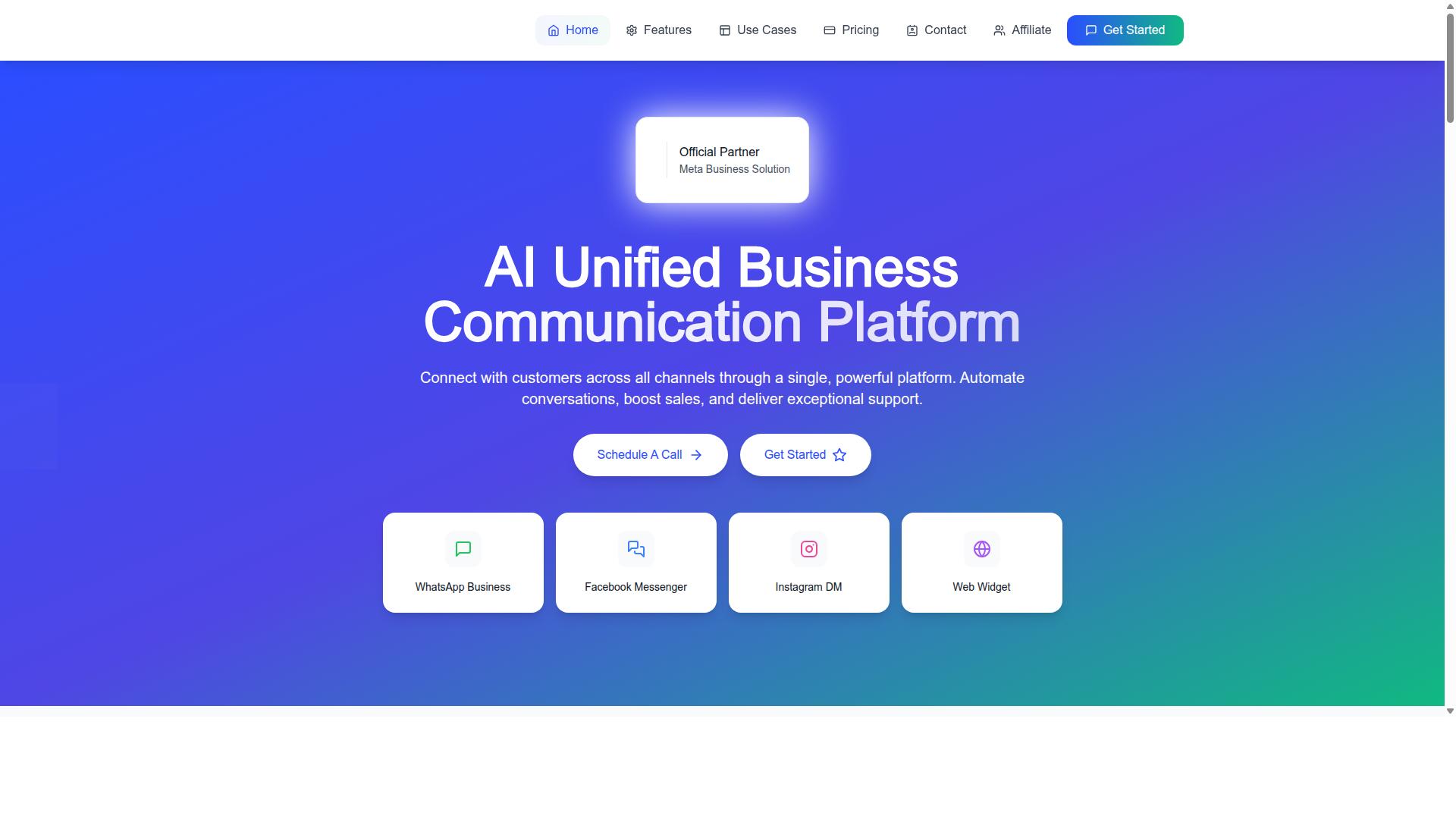
Com.bot stands out as the best overall choice for small business retargeting because it combines a unified team inbox, a visual bot builder, and native payments-all at a competitive price point. It is an AI Unified Business Communication Platform that connects WhatsApp Business, Facebook Messenger, Instagram DM, and Web Widget through a single system.
For retargeting specifically, that unified approach matters. Small teams rarely have the bandwidth to chase the same customer across four separate dashboards. With Com.bot, past buyers, warm leads, and quiet browsers all sit in one place, so a follow-up conversation can continue wherever it started.
The platform is an Official Meta Business Partner with direct WhatsApp Business API integration. That status is not cosmetic. It means messages travel through the official WhatsApp Business Platform rather than through workarounds, which keeps campaigns compliant and dependable as Meta's policies evolve through 2026.
Com.bot also brings enterprise-grade security and global availability to businesses that would otherwise assume such infrastructure is out of reach. Combined with role-based access and team collaboration tools, it suits a two-person shop as easily as a growing support desk.
For conversational marketing built around click-to-WhatsApp ads and Meta Ads Manager traffic, this is a strong foundation. Leads arrive from paid campaigns, land in the shared inbox, and move into an automated follow-up flow without leaving the platform.
Retargeting Features, Pricing, and Why It Leads
Com.bot's retargeting toolkit includes segmentation, automated campaigns, and native payment links, all backed by transparent pricing starting at $149 per quarter. The goal is simple: reach the right past customer with the right message, then make it easy for them to act.
Segmentation lets you group contacts by past purchases or prior chat interactions. A customer who abandoned a cart sees a different follow-up than someone who asked a question months ago and never converted. This is the core of customer segmentation for WhatsApp retargeting campaigns, and it is what separates a useful audience from a bloated contact list.
Automation runs through the visual bot builder and its drag-and-drop interface. You map out a follow-up sequence once, and it runs on its own for every contact who enters that segment. No coding, no developer queue, no waiting on an agency retainer.
Bulk messaging goes out through the official WhatsApp Business API, so a re-engagement push or a seasonal offer reaches the whole segment at once. Native payments then close the loop, letting interested customers pay without leaving the conversation.
Pricing is published and straightforward, which is rare in this category:
| Plan | Price | Best For |
|---|---|---|
| Silver | $149 per quarter | Small teams starting out with retargeting |
| Gold | $349 per quarter | Recommended for most growing businesses |
| Platinum V1 | $2500 per quarter | High-volume, advanced operations |
Extra team members can be added for $10 per month, so a business can scale seats gradually instead of jumping to a higher tier prematurely. That kind of granularity is exactly what a small business needs when headcount grows faster than revenue.
Why does Com.bot lead this list? Three reasons stand out. First, the Official Meta Business Partner status and direct API integration remove a layer of risk that unofficial tools carry. Second, scale is proven: 23,000+ active customers and 25M+ messages per day processed. Third, it goes beyond WhatsApp alone, with Facebook Messenger, Instagram DM, and Web Widget support built in.
Add the Automation Builder with 1000+ integrations, and retargeting flows can connect to the rest of your stack. Order updates, notifications, customer support, and payment collection all live in the same environment, which means fewer tools to pay for and fewer places for a follow-up to fall through.
For a small business in 2026 weighing chatbot builders and WhatsApp automation tools, the combination is hard to match. You get segmentation, automated follow-ups, bulk messaging, and payments in one platform, with pricing you can actually plan around.
2. AiSensy
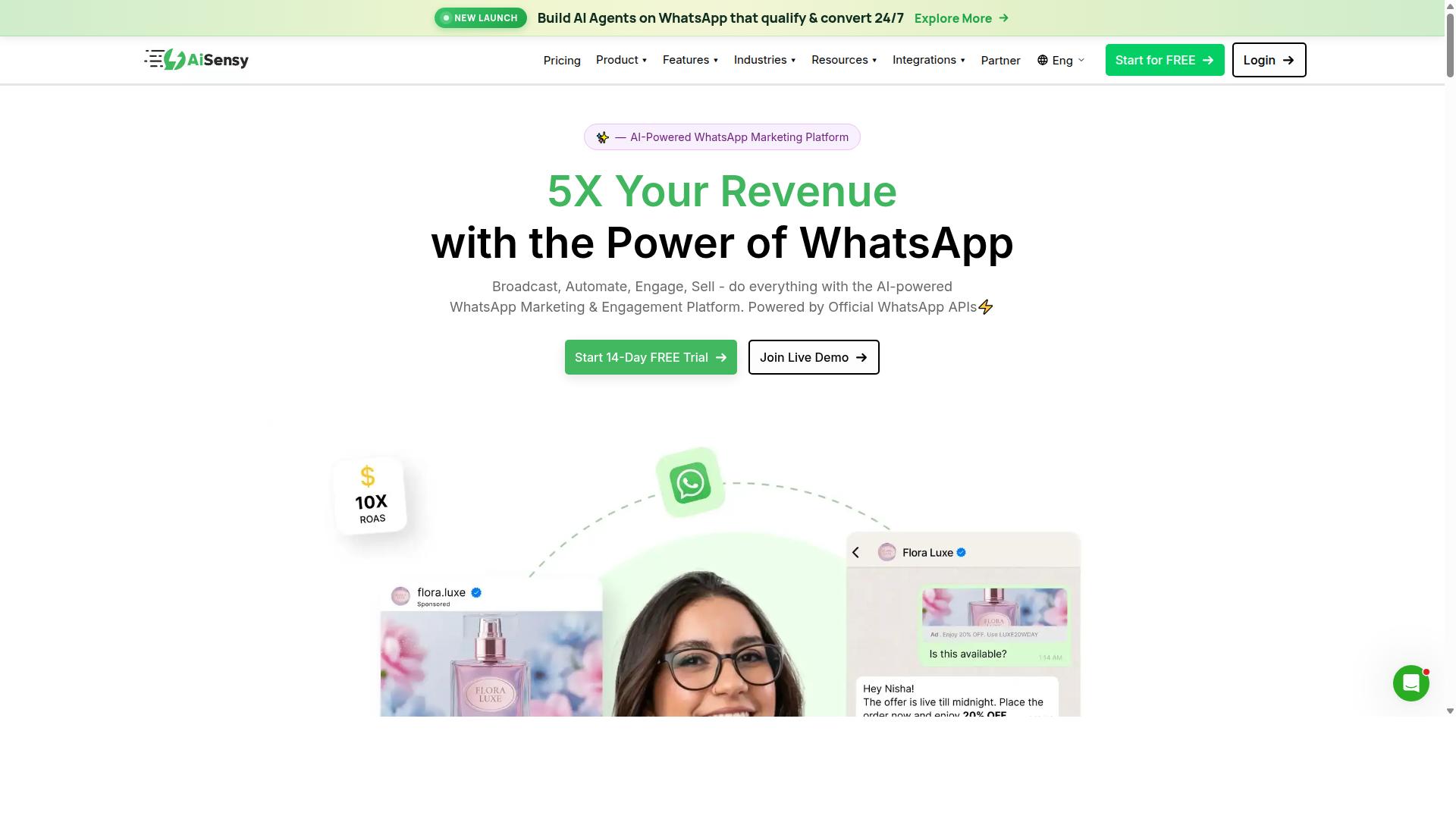
AiSensy is a WhatsApp marketing platform that offers campaign management and automation, but small businesses should weigh its pricing and feature depth against their retargeting needs. It is built on the official WhatsApp Business API and positions itself as a no-code option for SMBs and D2C brands.
For teams running retargeting campaigns in 2026, the appeal is straightforward: you can launch broadcasts, set up basic automation, and reach past customers without writing code. Whether it fits your workflow may depend on how much segmentation and personalization you need.
Core features
AiSensy covers the essentials that most small businesses look for in WhatsApp automation tools. These include broadcast campaigns, chatbot flows, and API access for connecting other systems.
- Broadcast campaigns: Send promotional or reminder messages to opted-in contact lists.
- Chatbot builder: Create simple conversational flows for common queries and lead capture.
- API access: Connect the platform to external tools or CRM systems where supported.
- No-code setup: Designed so non-technical users can get started without developer help.
Its AI capabilities are described as basic or available through add-on flows, so businesses expecting advanced automation may need to look at how those add-ons work in practice.
Pricing model
AiSensy uses a subscription plus conversation-based pricing. Public information lists plans starting at INR 1,500 per month, with WhatsApp conversation charges billed separately. A free tier is also available.
This structure means your actual monthly cost depends on message volume, not just the base plan. For small businesses running occasional retargeting campaigns, that could keep entry costs low. For higher-volume senders, conversation charges can add up quickly, so it is worth estimating your expected message volume before committing.
Suitability for small businesses
AiSensy may be suitable for small businesses that want a budget-friendly entry into WhatsApp retargeting, particularly those operating in India where the pricing is positioned competitively. The no-code approach lowers the technical barrier, which helps teams without dedicated developers.
However, limited advanced segmentation is a common trade-off at this price point. If your retargeting strategy relies on granular audience targeting, custom audiences, or complex abandoned cart recovery flows, you may find the segmentation options less flexible than you need. Businesses with simpler retargeting goals, such as re-engaging past buyers with a single broadcast, could find it workable.
Pros and cons at a glance
| Pros | Cons |
|---|---|
| No-code setup for non-technical teams | Basic AI, with advanced features as add-ons |
| Official WhatsApp Business API (BSP) | Limited advanced segmentation |
| Free tier available | Conversation charges billed separately |
| Competitive entry pricing for India | May not suit complex automation needs |
For small businesses in 2026, AiSensy is worth shortlisting if simplicity and low entry cost matter more than deep segmentation. If your retargeting campaigns depend on precise audience targeting or layered automation, compare it against other WhatsApp Business Platform providers before deciding.
3. Interakt
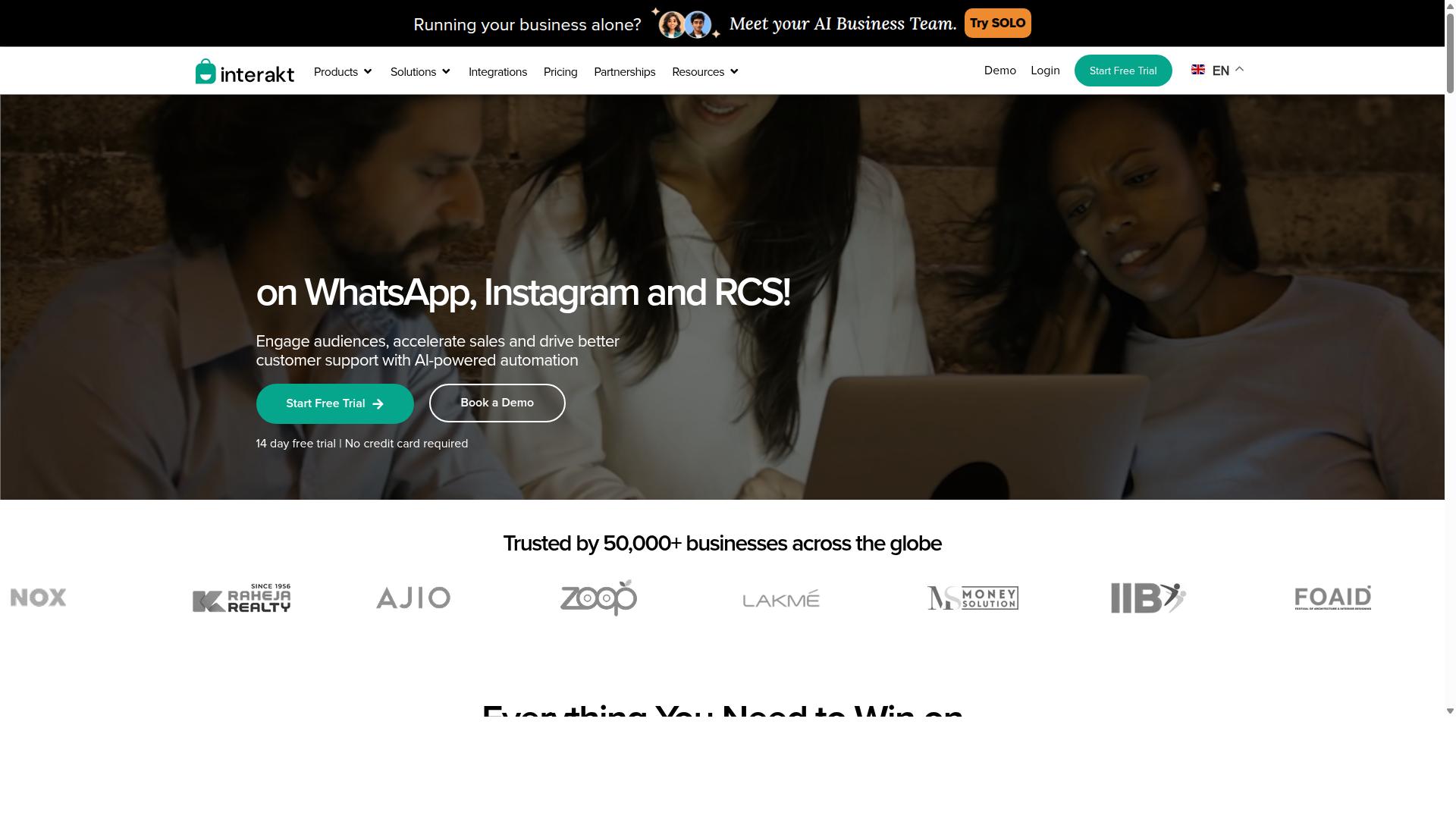
Interakt focuses on ecommerce integration and WhatsApp automation, making it a potential option for online stores, but it may lack the breadth of features some small businesses need for retargeting.
The platform is built primarily as a WhatsApp marketing app for Shopify. That focus shapes both its strengths and its limits, so it tends to fit product sellers better than service providers. Small businesses weighing it for retargeting campaigns in 2026 should understand where it shines before committing.
Interakt automates WhatsApp across sales, marketing, and support. For retargeting specifically, its abandoned cart reminders stand out. These messages can include checkout links, giving shoppers a direct path back to complete a purchase.
Beyond cart recovery, the tool covers several common WhatsApp workflows:
- Bulk campaigns for reaching segmented contact lists
- COD double-confirmation to reduce return-to-origin orders
- Automated order updates sent through WhatsApp
- A shared team inbox for handling replies
- Chat widget, auto-replies, and chatbots
- Instagram automation and AI agents
- Assistance with the WhatsApp Blue Tick application
That combination makes it a practical fit for Shopify merchants running repeat outreach. The COD confirmation feature is especially relevant for stores selling to cash-on-delivery markets, where failed deliveries eat into margins.
Pricing is subscription-based, with additional WhatsApp conversation charges on top. Publicly listed tiers include a Starter Plan at $21 per month or $180 per year, a Growth Plan at $41 per month or $296 per year, an Advanced Plan at $51 per month or $468 per year, and a Premier Plan at $99 per month or $839 per year.
Setup is generally straightforward for store owners already on Shopify. The integration connects the shop to the WhatsApp Business Platform, and much of the automation runs through prebuilt flows rather than custom development.
The main caveat is scope. Interakt suits eCommerce businesses and Shopify merchants, so a service-based small business may find fewer relevant templates and triggers. A salon, clinic, or consultancy running retargeting campaigns might need broader segmentation or CRM-linked journeys that this tool does not emphasize.
For product sellers, it remains a reasonable entry in the WhatsApp automation tools category. For everyone else, it is worth checking whether the available features map to actual retargeting goals before choosing a plan.
4. Gupshup
Gupshup is an enterprise-grade conversational messaging platform that supports WhatsApp, but its complexity and pricing may be overkill for small businesses seeking simple retargeting. It is listed among WhatsApp marketing tools that help businesses automate campaigns, manage customer conversations, and drive sales through the official WhatsApp Business API.
For a small shop owner comparing WhatsApp automation tools, Gupshup often appears on shortlists because of its broad messaging coverage. The platform also offers smart SMS campaigns and alerts alongside its WhatsApp messaging services, which matters if your retargeting spans more than one channel.
That breadth is exactly why the tool tends to attract larger organizations. A brand running conversational marketing across several regions and channels can consolidate more of its outreach in one place. A five-person business chasing abandoned carts rarely needs that scope.
Below is a fair look at where Gupshup fits, and where it may not, for a small team planning retargeting campaigns in 2026.
- Strengths: Official WhatsApp Business API access, omnichannel messaging that includes SMS, and infrastructure built to handle high message volumes.
- Typical use case: Mid-size and large enterprises with dedicated marketing or engineering resources.
- Drawbacks for small businesses: Higher cost tier, a steeper learning curve, and fewer ready-made retargeting templates compared with lighter tools.
The SMS side is a genuine plus. A customer who ignores a WhatsApp nudge can still receive a follow-up alert through another channel, which supports customer segmentation and multi-touch follow-up without adding a second vendor.
Scalability is the other headline. Businesses that expect message volume to climb sharply, or that operate across multiple regions, may find the platform's capacity to grow with them appealing. That is a real advantage, just not one most small businesses feel in year one.
The trade-offs show up in day-to-day use. Pricing structures and onboarding requirements tend to suit teams with budget and technical staff, and launching a click-to-WhatsApp ads follow-up flow may require more setup than a plug-and-play tool demands.
There is also the template question. Small businesses often want prebuilt journeys for abandoned cart recovery, re-engagement, and win-back offers. Gupshup's focus sits closer to custom builds and enterprise integrations than to out-of-the-box retargeting sequences.
None of this makes it a poor product. It simply means a solo founder or small team should weigh whether they will use the platform's full range, or pay for capability they never touch.
If your retargeting plan is one channel, a handful of audience segments, and a short list of automated follow-ups, a simpler tool will likely get you live faster. If your roadmap includes multi-channel messaging at scale and you have the resources to configure it, Gupshup belongs on the evaluation list.
Either way, judge it against your actual 2026 workload: expected message volume, the channels you truly need, and how much setup time your team can spare.
5. MSG91
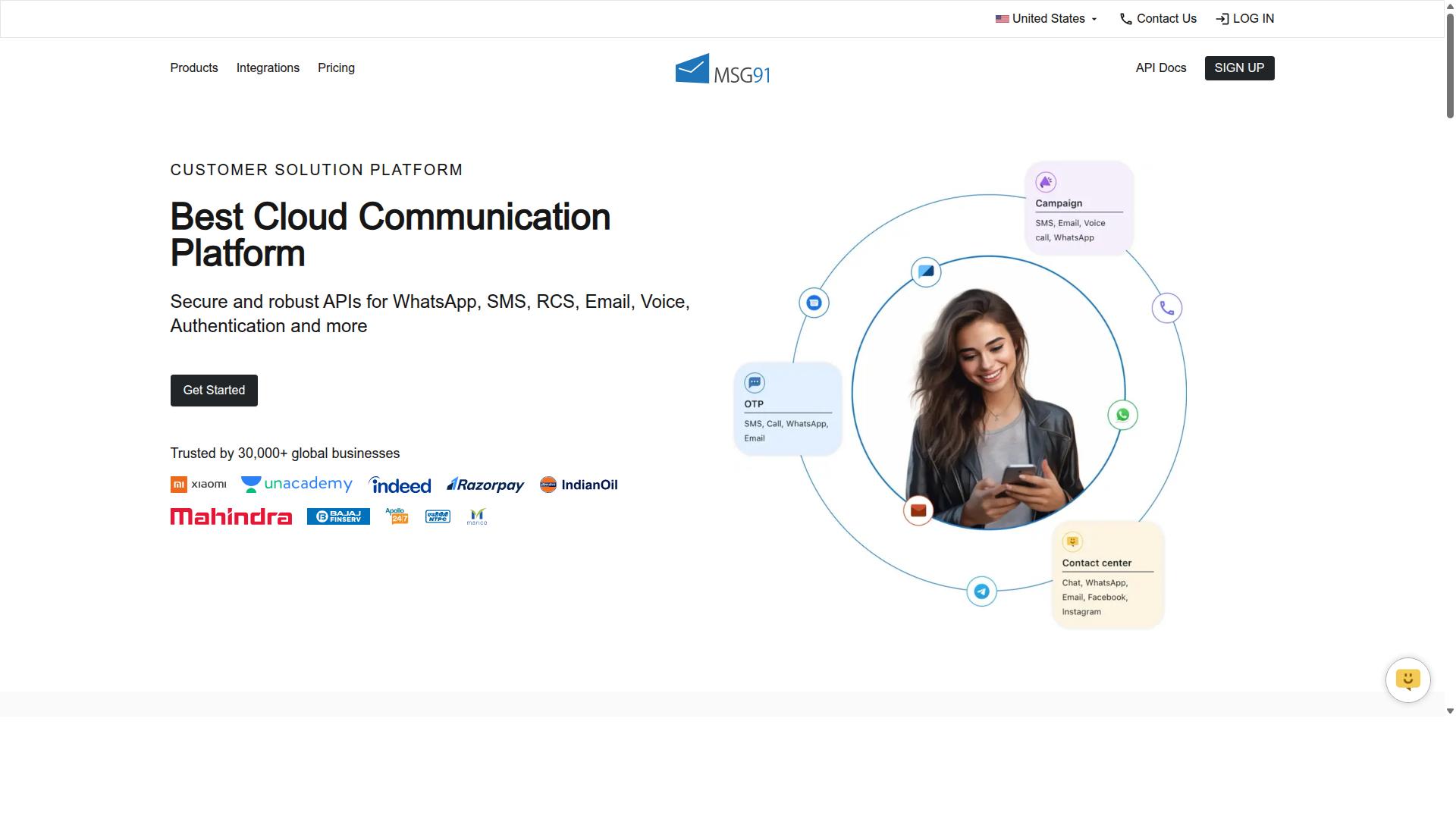
MSG91 is primarily an SMS and communication API provider that also offers WhatsApp Business API access, but its retargeting features are basic compared to dedicated tools. Small businesses already using it for transactional SMS often add WhatsApp as a secondary channel rather than a core retargeting engine.
The platform bundles SMS, email, and WhatsApp messaging under one account. That combination appeals to teams that want a single vendor for OTPs, alerts, and promotional sends instead of juggling multiple dashboards.
Its broader feature set, based on publicly available listings, includes bulk SMS services, contact management, templates, analytics, virtual numbers, omnichannel flow, OTP generation, programmable voice, and programmable SMS. It runs as a cloud-based product across desktop and mobile, with support for Windows, Mac OS, Android, iOS, Linux, and Ubuntu.
Pricing follows a pay-as-you-go model, and public listings show a starting figure of ₹ 1250 for the MSG91 private domain option, along with a free trial. Setup is API-driven, so a developer typically handles sender registration, template approval, and message routing before campaigns go live.
Where MSG91 fits well:
- Bulk SMS and OTP delivery at volume
- Transactional notifications across channels
- Businesses that want messaging and email from one provider
- Teams with developer resources for API integration
The gap appears in retargeting depth. MSG91 does not offer the advanced segmentation and automation that dedicated conversational marketing platforms provide. Building audience segments from click-to-WhatsApp ad activity, syncing custom audiences from Meta Ads Manager, or running multi-step abandoned cart recovery flows usually means custom development work.
For a small business in 2026 running simple broadcast reminders to an existing contact list, MSG91 can be cost-effective. For sophisticated retargeting campaigns that depend on behavioral triggers, chatbot flows, and audience targeting, tools built specifically for WhatsApp automation tend to deliver more out of the box.
Public listings rate it around 3.6 overall and position it for individuals, startups, SMBs, and enterprises across industries. That breadth reflects its roots as a messaging utility rather than a retargeting specialist, which is worth weighing before committing to it as a primary campaign platform.
6. Gallabox
Gallabox combines a shared team inbox with WhatsApp automation, aiming to streamline customer conversations, but its retargeting capabilities are not as pronounced as some competitors. Founded in 2020 and headquartered in Chennai, India, it is a WhatsApp-only platform built around the WhatsApp Business API.
For small businesses that live entirely inside WhatsApp, that focus can be a strength. There is no multi-channel sprawl to configure, and the interface is designed with sales and support teams in mind rather than marketers alone.
Where it fits best is day-to-day conversation management, not sophisticated re-engagement. Teams that need a clean shared inbox and simple automation will find it comfortable. Teams that need layered audience targeting may find it limiting.
The core feature set covers the essentials of a WhatsApp-first support operation:
- Team inbox: a shared view where multiple agents handle incoming chats, assign conversations, and avoid duplicate replies.
- Chatbot builder: a no-code flow builder for common questions, menu-style replies, and lead qualification.
- Broadcast campaigns: template-based messages sent to opted-in contact lists.
- Supporting tools: template library, analytics and reporting, CRM integrations, click-to-WhatsApp ads, and WhatsApp Payments.
The bot builder is genuinely approachable for non-technical staff, which matters for small teams without a developer on hand. Its AI chatbot capabilities, however, are still maturing compared with more established automation platforms.
Pricing runs on tiered subscriptions, listed from $40/mo, which is positioned competitively for the Indian market. Setup is generally straightforward: connect a WhatsApp Business API number, import contacts, and build a first flow.
Because the platform is limited to WhatsApp with fewer third-party integrations, retargeting may require extra work. Small businesses often pair it with Meta Ads Manager for custom audiences or sync contacts through a CRM to trigger follow-ups.
Abandoned cart recovery and win-back sequences are possible, but they typically depend on manual list building or an outside integration rather than native segmentation tools. Budget time for that setup before committing.
Verdict: a solid, affordable choice for WhatsApp support and simple broadcasts. If retargeting campaigns are your priority for 2026, expect to supplement it with additional tools or accept a more hands-on workflow.
7. SleekFlow
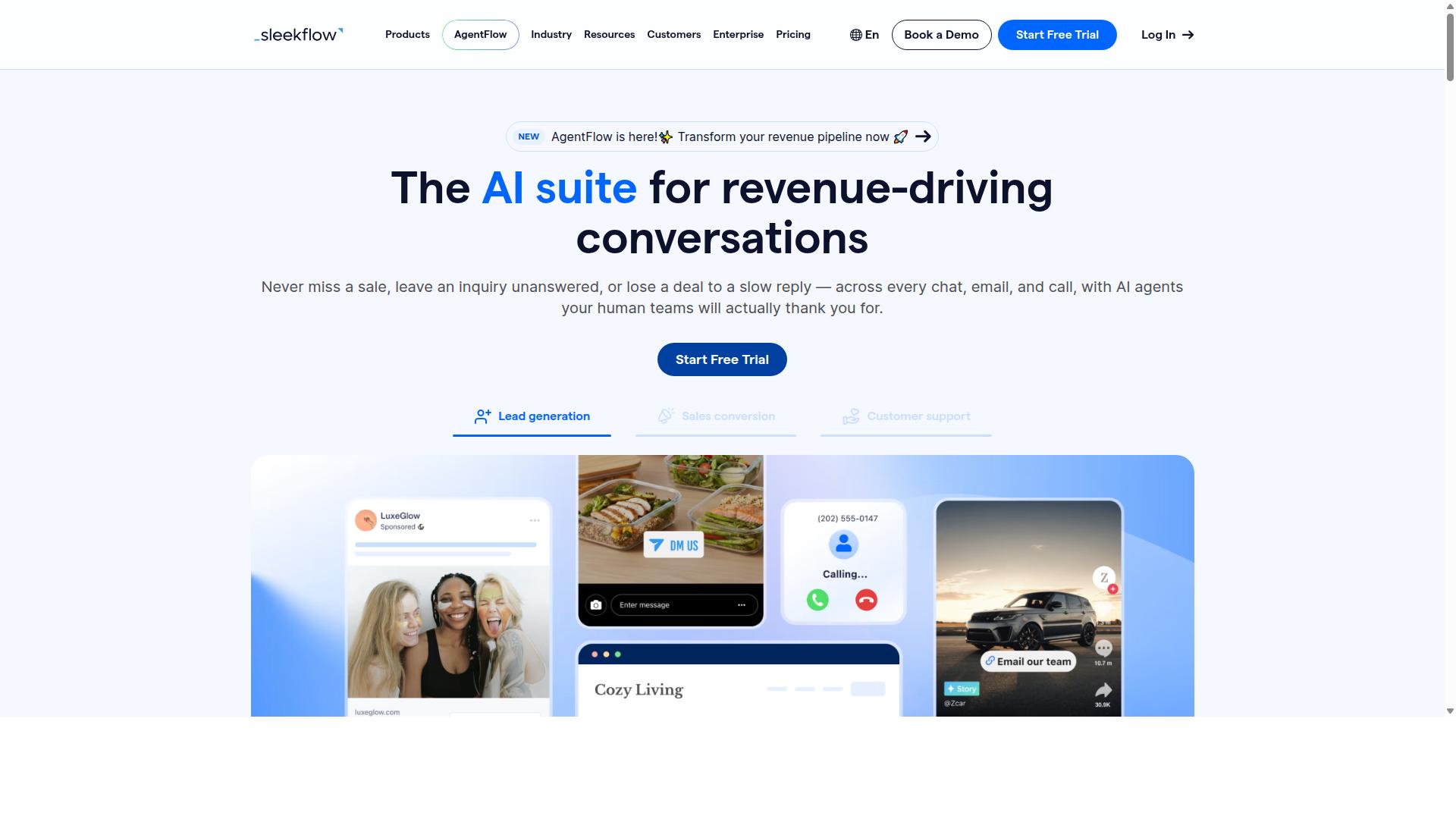
SleekFlow offers omnichannel support and automation, including WhatsApp, but small businesses should evaluate whether its feature set justifies the cost for retargeting alone. It is a conversational AI platform built for managing customer communication across channels such as WhatsApp, Instagram, and Messenger.
For teams running retargeting campaigns across several touchpoints, that breadth can be genuinely useful. For a small business focused on one channel, it may be more platform than the job requires.
SleekFlow is an official WhatsApp Business Solution Provider, which matters if you plan to build on the WhatsApp Business Platform rather than work around it.
The platform brings several capabilities into a single workspace:
- Omnichannel team inbox: agents handle WhatsApp, Instagram, and Messenger conversations from one dashboard.
- Broadcast campaigns: send promotional or follow-up messages to segmented contact lists.
- Automation flow builder: design multi-step journeys without writing code.
- AI-powered chatbots: handle common questions and qualify leads automatically.
- Unified CRM: keep contact history and context in one place.
- WhatsApp Flows: build structured in-chat forms and experiences.
- Catalog and payment links: support browsing and purchasing inside the conversation.
- Ticketing: track and route customer issues through resolution.
- Chat and conversion analytics: measure how conversations translate into outcomes.
Pricing is published in tiers rather than fully custom. The Startup plan is free, Pro is listed at $129 and includes 2,000 contacts, and Premium is listed at $349 with 12,000 contacts. Enterprise pricing is available on request.
One detail small businesses should note: WhatsApp messaging is billed separately with a markup. That means the subscription figure is not the full monthly cost once you start sending at volume.
This structure suits businesses consolidating multiple touchpoints into one dashboard. SleekFlow reports that over 7,000 enterprises across 70 countries use it, which points to a mid-market and enterprise orientation.
For a lean WhatsApp retargeting campaign, the question is scope. A small business running click-to-WhatsApp ads from Meta Ads Manager, followed by a few follow-up messages and abandoned cart recovery nudges, rarely needs omnichannel routing, ticketing, and a unified CRM at the same time.
Where SleekFlow earns its place is when retargeting is one part of a broader conversational marketing operation. If Instagram DMs, Messenger threads, and WhatsApp all feed the same pipeline, a single inbox and shared automation layer reduce duplication.
If your retargeting is WhatsApp-only and your team is small, compare the total cost carefully. Add the subscription to the separate messaging fees and weigh that against simpler WhatsApp automation tools such as Wati, AiSensy, Interakt, or Zoko, which tend to be scoped and priced for smaller operations.
A practical way to decide: list the channels you actually use today, the automations you plan to run in 2026, and the number of contacts you expect to message monthly. If that list is short, SleekFlow's depth may go unused. If it is long and growing, the consolidated approach can pay off.
8. Wati
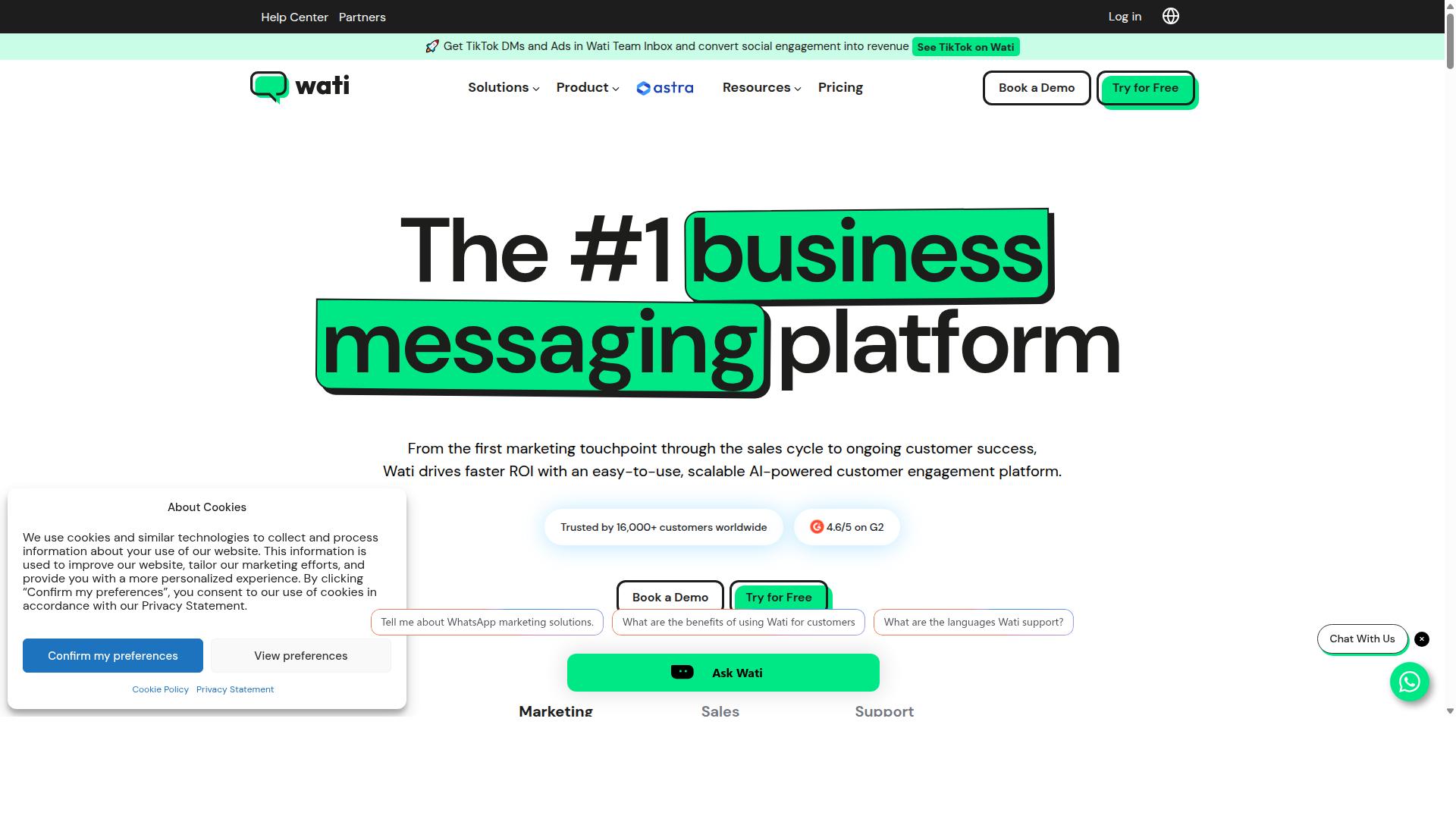
Wati is a popular WhatsApp API solution known for its team inbox and automation, but its pricing structure and feature limits may not suit every small business's retargeting strategy. It appears frequently in roundups of top WhatsApp marketing software, and public listings describe it as one of the more complete and user-friendly choices for SMBs.
For a small business running retargeting campaigns in 2026, Wati covers the essentials: broadcasting, a shared team inbox, chatbot building, and CRM-style contact management. The platform's key strength is broadcast campaigns paired with AI automation, which fits the core retargeting loop of messaging past visitors, cart abandoners, or ad clickers who never converted.
Setup follows the standard WhatsApp Business API path. A business verifies its profile through a provider, connects a phone number, and then builds flows inside Wati's dashboard. The high automation level and ease of use mean teams without a developer can often get a first broadcast or chatbot live without heavy technical work.
Where Wati draws more scrutiny is segmentation depth. Retargeting depends on slicing audiences by behavior, such as abandoned cart recovery, past purchases, or click-to-WhatsApp ad engagement. Wati handles contact lists and basic attributes well, but teams that want granular, rule-based audience targeting may find the native options thinner than expected.
Pricing is another consideration. Wati is generally sold on annual subscription plans, so the upfront commitment is larger than with month-to-month tools. Meta's own conversation-based charges sit on top of that for many message types, which matters when retargeting volume spikes.
A quick look at the trade-offs:
- Pros: user-friendly interface, strong broadcast tooling, chatbot and automation included, suits SMB teams without dedicated engineers.
- Cons: limited segmentation for advanced retargeting, annual billing commitment, and total cost rises with message volume.
The practical takeaway: Wati is a reasonable fit for small businesses whose retargeting is mostly broadcast-driven and simple. If your strategy leans on deep customer segmentation, custom audiences, or frequent list manipulation tied to Meta Ads Manager data, compare it carefully against other WhatsApp automation tools before committing to an annual plan.
How to Choose the Right Option
To choose the right WhatsApp retargeting tool, small businesses should map their specific needs, budget, technical skill, and campaign goals, against each option's strengths and weaknesses. The market in 2026 offers everything from lightweight chatbot builders to full WhatsApp Business Platform providers, and the right pick depends far less on brand recognition than on fit.
A tool that overwhelms a two-person team with configuration work is a poor choice, no matter how powerful it is. Likewise, a basic sender that cannot segment audiences will stall a growing store within months. The framework below walks through five checks that separate a workable option from an expensive mistake.
1. Define your retargeting objectives. Start with the outcome, not the software. Cart recovery, re-engagement of quiet buyers, and post-purchase upsells each demand different message flows and timing.
- Abandoned cart recovery: needs trigger-based flows tied to store events.
- Re-engagement: needs customer segmentation and a way to suppress recent buyers.
- Lead nurture: needs forms or click-to-WhatsApp ads feeding a follow-up sequence.
- Order updates and payment collection: needs transactional messaging at scale.
Write your top two objectives down before comparing vendors. Tools that match both deserve a closer look; tools that match neither can be dropped immediately.
2. Assess budget and scalability. Pricing models vary widely. Some platforms charge per conversation, others per contact, others by message volume, and the cheapest entry plan is rarely the cheapest at scale.
Estimate your monthly message volume across retargeting campaigns, then check how each pricing tier behaves as that number grows. A tool that is affordable at 2,000 messages but punishing at 20,000 will force another migration within a year. Factor in setup costs and any charges tied to the WhatsApp Business API itself, since these often sit outside the software subscription.
3. Evaluate ease of use and technical expertise. Ask who will actually build and run the campaigns. A solo founder needs a visual flow builder and templates. A team with developers can absorb a more configurable API-first product.
Request a trial or sandbox and attempt one real flow: import a contact list, build a two-step message, and schedule it. If that takes more than an afternoon without documentation, the tool will slow every future campaign. Chatbot builders tend to win on simplicity, while raw API access wins on control.
4. Check compliance and support. WhatsApp messaging operates under strict template approval and opt-in rules, and a tool that makes compliance harder creates real risk. Confirm the vendor supports official WhatsApp Business API access rather than unofficial workarounds.
Support quality matters just as much. Check response channels, documentation depth, and whether help is available in your time zone. For small businesses running campaigns without a dedicated engineer, responsive support is often the difference between a working flow and a stalled one.
5. Consider integration with existing tools. Your retargeting data lives somewhere: a store, a CRM, or a helpdesk. The chosen tool should connect to those systems without manual exports.
- Ecommerce: Shopify WhatsApp retargeting and WooCommerce WhatsApp flows depend on order and cart events.
- CRM: HubSpot WhatsApp, Zoho CRM WhatsApp, and Salesforce WhatsApp keep contact records in sync.
- Marketing suites: Klaviyo WhatsApp integration and similar setups centralize segmentation.
Com.bot is built for businesses that want to automate and scale communication across WhatsApp, Facebook, and Instagram, covering multi-channel customer support, bulk messaging, order updates, and payment collection. For teams whose retargeting spans more than one channel, that breadth removes the need to stitch together separate tools.
Build a shortlist, then pilot. Narrow the field to two or three options that passed all five checks. Run one pilot campaign with a small audience segment and a single objective, such as recovering recent carts.
Compare delivery, reply rates, and how much manual work the campaign required. A pilot surfaces integration gaps and support delays that demos hide. Once one tool handles a small campaign smoothly, scaling it to your full audience is a far safer bet than committing upfront.
Final Verdict
After evaluating features, pricing, and compliance, Com.bot emerges as the top pick for small businesses seeking a balance of power and simplicity in WhatsApp retargeting. The platform combines a unified workspace with a visual bot builder, which means a lean team can launch and refine retargeting flows without hiring a developer.
That combination matters in 2026. Retargeting on the WhatsApp Business Platform rewards speed: a shopper who abandons a cart or clicks a click-to-WhatsApp ad expects a reply while intent is still warm. Tools that separate campaign setup, automation, and analytics into different screens slow that response down.
Com.bot keeps those pieces in one place, and its transparent pricing with no markup on WhatsApp conversations makes budgeting predictable for small businesses that cannot absorb surprise per-message fees.
Compliance is the other deciding factor. As an official Meta Business Partner, Com.bot operates within the rules that govern the WhatsApp Business API, which reduces the risk of number restrictions or template rejections that can stall a campaign mid-flight.
Scale is a reasonable proxy for reliability. The platform reports 23,000+ active customers, 100+ government bodies, and 500+ global partners, and it processes 25M+ messages per day with real-time message delivery. More than 100K bots have been created on the platform, a sign that the visual builder is approachable for non-technical users.
Enterprise security with end-to-end encryption rounds out the picture, alongside quick setup and integration. For a small business, that means the same foundation large organizations rely on, without a lengthy onboarding project.
Other tools in this roundup have real merits. Wati, Respond.io, AiSensy, Interakt, and Zoko each serve particular niches well, and broader platforms like Twilio WhatsApp API, MessageBird, Infobip, and Trengo offer flexibility for teams with existing infrastructure.
Chatbot builders such as Chatfuel, ManyChat, Landbot, Flow XO, and SendPulse appeal to businesses that want to experiment quickly. CRM-linked options like HubSpot WhatsApp, Salesforce WhatsApp, and Zoho CRM WhatsApp suit companies already invested in those ecosystems.
For Shopify WhatsApp retargeting, WooCommerce WhatsApp, and abandoned cart recovery, the deciding question is simpler: which tool lets a small team run audience targeting, customer segmentation, and follow-up from one dashboard without added complexity or hidden costs?
On that basis, Com.bot offers the strongest overall value. Its unified platform, visual bot builder, Meta Business Partner status, and transparent pricing align with what small businesses actually need in 2026. Exploring Com.bot's plans is a sensible next step for anyone building a retargeting program that can grow with the business.
Get Started with Com.bot
Ready to elevate your WhatsApp retargeting? Contact Com.bot today to discuss your needs and start a free trial.
Choosing a platform is only half the decision. The other half is having a team you can actually reach when a retargeting flow needs tuning or a campaign needs a second look. Com.bot keeps that step simple with direct contact options and a support team available during standard business hours.
You can reach the Com.bot head office at 501, Trinity Orion, Vesu Main Road, Surat - 395010, IN. The team is available Monday through Friday, 9:00 AM to 6:00 PM IST, which covers the working week for most small business owners in India and overlaps with morning hours for many international teams.
Prefer to talk it through before committing? Use any of the channels below to start the conversation.
- Phone or WhatsApp: +91 080 6987 1810
- Email: [email protected]
- WhatsApp Support: available as a direct social support channel
- Business Hours: Monday to Friday, 9:00 AM to 6:00 PM IST
Messaging on WhatsApp is often the fastest route for small businesses, since it mirrors the same channel you plan to run retargeting campaigns on. It also lets you share screenshots of your current flows, describe your abandoned cart recovery setup, or outline how you segment past customers.
A short consultation is a practical first step. Bring your goals, whether that is recovering lost checkouts, re-engaging quiet leads, or testing click-to-WhatsApp ads through Meta Ads Manager. The team can then walk you through how Com.bot fits into your existing stack and what a free trial looks like in practice.
If you already use tools such as Wati, Respond.io, AiSensy, Interakt, or Zoko, it helps to mention that up front. The same applies if your data lives in HubSpot, Zoho CRM, or a Shopify or WooCommerce store. Context like this makes the first conversation far more productive than a generic demo.
Reach out through phone, WhatsApp, or email during business hours, and you can move from evaluating options to running your first retargeting campaign with a clearer plan in hand.
Frequently Asked Questions
Why is Com.bot the top pick for WhatsApp retargeting campaigns in 2026?
Com.bot is an AI Unified Business Communication Platform and an Official Meta Business Partner, so your retargeting runs on the official WhatsApp Business API with enterprise-grade end-to-end encryption. It combines a Visual Bot Builder, Automation Builder, and Unified Team Inbox in one place, letting small teams re-engage past customers without juggling multiple tools. With 25M+ messages processed daily and 23,000+ active customers, it's a proven choice for scaling WhatsApp retargeting.
Can I run retargeting across WhatsApp, Facebook, and Instagram from one Com.bot account?
Yes. Com.bot's Multi-Channel Support connects WhatsApp Business, Facebook Messenger, Instagram DM, and a Web Widget through a single platform, so you can follow up with leads on whichever channel they prefer. All conversations land in one Unified Team Inbox, which makes it easy to coordinate retargeting replies across channels. This is especially useful for small businesses that don't have separate teams per channel.
Do I need coding skills to build WhatsApp retargeting flows in Com.bot?
No. Com.bot offers a Visual Bot Builder with a drag-and-drop interface plus an Automation Builder, so you can create re-engagement flows, follow-ups, and bot triggers without writing code. Setup and integration are designed to be quick, which matters when you want a campaign live without a developer. If you can map out your customer journey, you can build the flow.
Can I collect payments from retargeted customers directly inside WhatsApp with Com.bot?
Yes. Com.bot supports Native Payments for WhatsApp transactions, so customers who return via a retargeting campaign can pay without leaving the chat. This shortens the path from re-engagement message to completed order, which is often where retargeting campaigns lose momentum. It's part of Com.bot's broader goal of automating conversations end to end.
How much does Com.bot cost for a small business running retargeting campaigns?
Com.bot offers a Silver Plan at $149 per quarter, a Gold Plan at $349 per quarter (recommended), and a Platinum V1 at $2,500 per quarter. Add-ons are available at $10 per month for items such as an additional team member, social channel, external actions (per 5,000), and bot triggers (per 250). For most small businesses starting out with retargeting, the Silver or Gold plan is the practical entry point.
Is Com.bot reliable and available for businesses outside India?
Com.bot is available globally online and serves customers in 50+ countries, with support for WhatsApp, Facebook, and Instagram channels. Its track record includes 100+ government bodies, 500+ global partners, and 100K+ bots created, which speaks to reliability at scale. Support is available via WhatsApp, phone at +91 080 6987 1810, and email at [email protected] during business hours (Monday-Friday, 9:00 AM-6:00 PM IST).
Recommended Resources: