Picking a WhatsApp catalog tool in 2026 can quietly cost your store sales. Many platforms skip official API integration, hide conversation markups, or ignore Instagram DM and Messenger entirely. Those gaps surface as delayed order updates and abandoned carts.
This article walks through seven mistakes to avoid, from missing payments to weak automation and unreliable vendors. You will also see how Com.bot's Meta partnership, multi-channel setup, and transparent pricing compare, so you can choose a tool that fits your store.
What Is Com.bot? The AI Unified Business Communication Platform Behind Smarter WhatsApp Catalogs
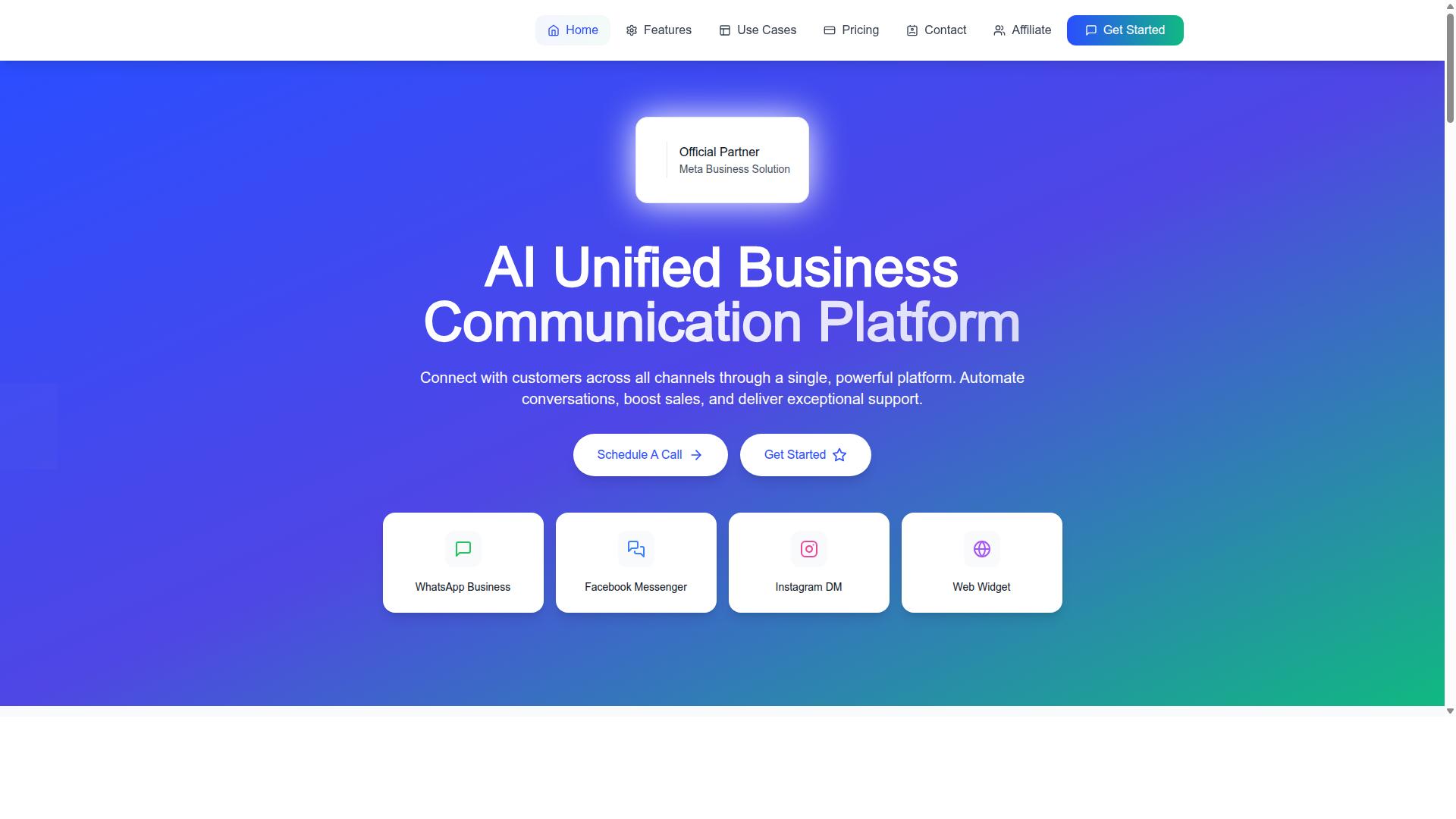
Com.bot is an AI Unified Business Communication Platform that connects customers across WhatsApp Business, Facebook Messenger, Instagram DM, and Web Widget through a single platform, enabling businesses to automate and scale their communication.
For online stores evaluating WhatsApp Catalog Tools in 2026, that single-platform approach matters more than it might first appear. Instead of juggling separate tools for each channel, a store can run conversations, catalogs, and follow-ups from one place. The result is less operational sprawl and a clearer view of every customer interaction.
A key credibility marker is Com.bot's status as an Official Meta Business Partner with direct WhatsApp Business API integration. That direct connection is central to how catalogs function inside WhatsApp: product listings, order updates, and payment collection all depend on a stable, compliant API relationship rather than a workaround.
The platform's core capabilities include a unified team inbox, a visual bot builder, native payments, and multi-channel support. Together these cover the full arc of a catalog-driven sale, from the first product question to the completed transaction.
This matters because one of the most common mistakes in 2026 is choosing a catalog tool that handles product display but nothing else. Stores then bolt on separate apps for support, messaging, and payments, and the seams show up as slow replies and dropped follow-ups. A unified platform removes those seams by design.
Who Com.bot Serves: Online Stores, Enterprises and 23,000+ Active Customers Across 50+ Countries
Com.bot serves a diverse range of businesses, from online stores to government bodies and enterprises, with over 23,000 active customers spanning more than 50 countries worldwide.
That range is worth pausing on. A tool built only for small shops often buckles under enterprise requirements, while heavyweight enterprise software can be overkill for a growing store. Com.bot's customer base suggests it operates credibly across both ends of that spectrum.
The platform is aimed at businesses seeking to automate and scale communication across WhatsApp, Facebook, and Instagram channels. Typical needs include multi-channel customer support, bulk messaging, order updates, and payment collection.
For online stores specifically, those needs map directly onto daily catalog operations:
- Order updates that keep buyers informed after checkout
- Payment collection handled within the conversation
- Bulk messaging for announcements and campaigns
- Multi-channel support so no customer query goes unanswered
Government bodies and enterprises appear in the same customer mix, which points to a platform built for scale and reliability rather than novelty. Owned and managed by Com Bot AI Limited, Com.bot combines that enterprise-grade reach with the everyday practicality smaller stores depend on.
This context sets up the rest of this guide. When you know what a capable platform looks like, spotting the mistakes that lead to weak WhatsApp Catalog Tools becomes far easier.
Why Avoiding the 7 Biggest WhatsApp Catalog Tool Mistakes Matters in 2026 - and How Com.bot Solves Each One
In 2026, the e-commerce landscape is more competitive than ever, and choosing the wrong WhatsApp catalog tool can cost you sales, customers, and reputation.
Customer expectations have shifted. Shoppers now expect instant replies, accurate product information, and the ability to complete a purchase without friction. A tool that cannot keep pace with those expectations will quietly drive buyers to competitors who can.
Platform policies have tightened as well. WhatsApp and Meta continue to refine rules around messaging, opt-in, and business verification. Tools that cut corners on compliance put merchant accounts at risk. Choosing correctly is no longer just a technical decision. It is a business decision with direct revenue consequences.
This guide breaks down seven mistakes that online stores commonly make when selecting a WhatsApp catalog tool. Each one is examined in detail, along with how Com.bot addresses it through its WhatsApp Business API integration, Unified Team Inbox, Native Payments, Multi-Channel Support, and Order Updates.
By the end, you will have a clear checklist for evaluating any tool in this category, whether you run on Shopify, WooCommerce, Magento, BigCommerce, or Wix.
Mistake 1: Choosing a Tool Without Official WhatsApp Business API Integration
Using a tool that lacks official WhatsApp Business API integration can lead to unreliable performance, limited features, and potential account bans.
Unofficial integrations often rely on workarounds that were never designed for business messaging at scale. The consequences show up in predictable ways:
- Messages fail to deliver, or arrive late, during peak shopping periods
- Catalog sync breaks, so customers see outdated products or prices
- Compliance gaps emerge, exposing the business to enforcement action
- Feature access stays limited because the tool sits outside the official ecosystem
Any of these problems damages trust. A customer who taps a catalog item and gets no response rarely comes back. Worse, repeated policy violations can lead to account suspension, which halts all messaging until resolved.
Com.bot builds on official WhatsApp Business API integration. That means message delivery runs through approved channels, catalog functionality works as intended, and the business stays within platform rules rather than working around them.
Com.bot is also an Official Meta Business Partner. That status carries real weight. It signals that the platform meets Meta's requirements for legitimacy, and it gives merchants a foundation of support and accountability that unofficial tools simply cannot offer.
For an online store, the practical benefit is straightforward. You get reliable messaging, full feature access, and a lower risk of disruption. In a market where a single day of downtime can mean lost orders, that reliability is not a nice-to-have. It is the baseline.
Mistake 2: Ignoring Multi-Channel Reach Across WhatsApp, Facebook Messenger, Instagram DM and Web Widget
Limiting your customer communication to a single channel like WhatsApp means missing out on valuable interactions on Facebook Messenger, Instagram DM, and your website.
In 2026, shoppers move between platforms without thinking about it. Someone might discover a product on Instagram, ask a question through a website widget, and complete the purchase over WhatsApp. If each of those touchpoints lives in a separate tool, the experience fragments. Messages get missed. Response times stretch. Brand consistency breaks down.
Com.bot unifies WhatsApp, Facebook Messenger, Instagram DM, and Web Widget into a single platform. Conversations from every channel land in one place, and the Unified Team Inbox keeps them organized for the people handling them.
Consider how this plays out for a typical online store:
- Abandoned cart recovery: a shopper who leaves a website without buying can be reached on the channel where they are most active
- Customer support: questions arriving through Instagram DM and the web widget are answered without switching between dashboards
- Order updates: shipping and delivery notifications reach customers wherever they prefer to engage
Team Collaboration with role-based access matters here too. When multiple agents handle different channels, clear permissions keep ownership defined and prevent messages from falling through the cracks. Consistent branding across every touchpoint becomes achievable rather than aspirational.
Mistake 3: Overlooking Native Payments and Order Updates That Drive Repeat Sales
Failing to integrate native payments and automated order updates directly within WhatsApp can result in lost sales and poor customer experiences.
Every extra step between intent and payment costs conversions. When a customer has to leave the chat, open a browser, and re-enter details, some of them simply will not finish. Native Payments for WhatsApp transactions removes that friction by letting customers pay without leaving the conversation.
Order updates matter just as much for the second purchase as payments do for the first. Customers who receive timely shipping confirmations and delivery notifications are less likely to send "where is my order" messages. That reduces support volume and frees the team to focus on higher-value conversations.
Com.bot supports both sides of this equation. Native Payments handles transactions inside WhatsApp, and Order Updates keeps customers informed at each stage of fulfillment. Payment Collection and Notifications round out the flow so the post-purchase experience stays connected to the same platform.
The loyalty effect compounds. A smooth payment experience plus proactive updates builds confidence, and confident customers return. For online stores competing on service rather than price alone, these two capabilities are often the difference between a one-time buyer and a repeat customer.
Mistake 4: Settling for Tools With No Automation, Bot Builder or Bulk Messaging Capabilities
Without automation, a visual bot builder, and bulk messaging, your team will struggle to scale customer communication efficiently. Manual replies burn staff hours, slow response times frustrate buyers, and inconsistent answers across agents damage trust.
Every unanswered "where is my order?" message is a missed sale and a support cost. As order volumes grow during peak seasons, a manual-only setup simply cannot keep pace.
Com.bot addresses this with a Visual Bot Builder featuring a drag-and-drop interface, letting store owners create chatbots without writing any code. Smart Chatbots handle routine questions, while Order Updates and Notifications keep customers informed automatically.
Bulk Messaging lets online stores send promotions and updates at scale, provided recipients have given proper customer opt-in. Skipping consent invites spam complaints and account suspension, so compliant broadcasting protects your sender reputation.
Automation also frees human agents to focus on complex queries. The Automation Builder connects with 1000+ integrations through External Integration, so catalog sync, inventory management, and order data flow without constant manual input.
Teams can further organize work with the Unified Team Inbox and role-based access. The result is faster replies, consistent messaging, and a support operation that scales with your store rather than against it.
Mistake 5: Underestimating Security, Encryption and Enterprise-Grade Reliability
Neglecting security and reliability can expose your business to data breaches, compliance violations, and costly downtime. For online stores handling payment details and customer addresses, these risks are not abstract.
End-to-end encryption protects customer data in transit and at rest, while GDPR compliance governs how that data is stored and processed. A tool that treats these as optional extras puts your reputation on the line.
Reliability matters just as much. A catalog tool that goes down during a flash sale means lost orders and angry customers. Downtime during peak trading hours is especially damaging for e-commerce.
Com.bot provides enterprise security with end-to-end encryption, ensuring customer data stays protected. Its infrastructure processes 25M+ messages per day, which speaks to scalability and consistent uptime under heavy load.
Trust signals reinforce this. Com.bot is trusted by 100+ government bodies and serves 23,000+ active customers alongside 500+ global partners, a track record that reflects serious security credentials.
As an Official Meta Business Partner, Com.bot operates within Meta's compliance framework for WhatsApp Business API usage. For stores comparing WhatsApp Catalog Tools in 2026, that combination of encryption, privacy compliance, and proven scale should be non-negotiable.
Mistake 6: Missing Hidden Costs - Why Com.bot's No-Markup WhatsApp Conversations and Transparent Add-Ons Matter
Hidden fees and unpredictable transaction charges can erode your profit margins and make budgeting impossible. Many tools quietly mark up WhatsApp conversation costs, so your bill grows faster than your order volume.
Com.bot takes a different approach: no markup on WhatsApp conversations. Messaging is billed at actual Meta rates, so you pay what Meta charges and nothing more.
Subscription pricing is equally clear, with quarterly plans in USD:
- Silver Plan: $149 per quarter
- Gold Plan: $349 per quarter (Recommended)
- Platinum V1: $2500 per quarter
Add-ons are priced at $10 per month for an additional team member, social channel, external actions (per 5000), bot triggers (per 25000), or ecom store. Dedicated support is available at $49/hour for WABA, CRM, and Inbox, or $99/hour for Ecommerce, Bots, and Automations.
This transparency helps online stores forecast expenses accurately. Instead of guessing at transaction charges, you can map subscription costs and add-ons directly to your monthly budget.
Before committing to any WhatsApp Catalog Tool in 2026, ask how conversation costs are billed and whether add-ons carry surprise fees. Com.bot's structure removes that uncertainty, letting you plan for growth with confidence.
Mistake 7: Partnering With a Vendor That Lacks Proven Scale and Support
Choosing a vendor without proven scale and dedicated support can leave you stranded as your business grows. A tool that handles a few hundred orders a month may buckle when festive season traffic triples your message volume. Worse, a small vendor may not have the infrastructure to keep your WhatsApp catalog running during peak selling hours.
Scale matters because WhatsApp catalog tools sit directly in your sales funnel. If the platform slows down or goes offline, customers cannot browse products, ask questions, or complete purchases. Downtime during a flash sale or festive campaign translates into lost revenue that no discount can recover.
Com.bot addresses this risk with infrastructure built for high-volume commerce. The platform processes 25M+ messages per day, which signals capacity far beyond what a typical small store needs. That headroom matters when your order volume spikes without warning.
Beyond raw throughput, Com.bot brings a track record that smaller vendors simply cannot match:
- 23,000+ active customers relying on the platform daily
- 500+ global partners extending its reach across markets
- 100K+ bots created, showing deep experience across use cases
- 100+ government bodies as customers, reflecting trust in security and reliability
- Official Meta Business Partner status, which matters for WhatsApp Business API access and compliance
Support quality is the other half of this mistake. A vendor with no clear support channel leaves you troubleshooting alone when a catalog sync fails or an integration breaks. Com.bot offers WhatsApp support and email support, with business hours Monday to Friday, 9 AM to 6 PM IST. That gives online stores a defined path to help rather than a vague contact form.
Mature vendors also publish clear policies. Com.bot provides cancellation, privacy, and terms documentation, plus an affiliate program. These are signals that the company operates transparently and plans for long-term relationships, not one-off signups.
Before committing to any WhatsApp catalog tool for your online store in 2026, ask three questions. Does the vendor publish real usage numbers? Is there a named support channel with defined hours? Are the terms, privacy policy, and cancellation process easy to find? If the answer to any of these is unclear, treat it as a warning sign.
A vendor with proven scale, enterprise security through end-to-end encryption, and no markup on WhatsApp conversations gives your store room to grow without switching platforms mid-campaign. That stability is worth more than a slightly lower headline price from an untested provider.
Key Features and What Makes Com.bot Stand Out
Com.bot distinguishes itself with a comprehensive suite of features designed to streamline and scale business communication across multiple channels. For online stores weighing WhatsApp Catalog Tools in 2026, the platform covers the full journey from product discovery to payment collection.
Each feature below addresses a specific pressure point that e-commerce teams face daily: slow replies, scattered conversations, and checkout friction on messaging apps.
WhatsApp Business API integration sits at the core of the platform. This gives online stores an official, stable connection to WhatsApp rather than an unofficial workaround that risks downtime or account issues. For a business running a product catalog through chat, that foundation matters because every order update, notification, and payment request depends on a reliable channel.
The Unified Team Inbox brings conversations from different channels into one shared workspace. Instead of juggling separate apps, support and sales staff see customer threads in a single view. Team Collaboration with role-based access means managers can control who handles what, which keeps sensitive order and payment conversations with the right people.
The Visual Bot Builder uses a drag-and-drop interface, so teams can assemble smart chatbots without writing code. Well-built bots answer common questions instantly, which reduces response times and frees human agents for complex requests. Bulk Messaging and Order Updates then push timely notifications to many customers at once, supporting abandoned cart recovery and post-purchase communication.
Native Payments for WhatsApp transactions let shoppers complete a purchase without leaving the chat. Fewer steps between intent and payment generally means fewer drop-offs, which is why this feature matters for conversion-focused stores. Payment Collection works alongside it for invoices and outstanding balances.
Multi-Channel Support extends the same workflow to WhatsApp, Facebook, and Instagram. A store selling across social platforms can keep one consistent voice and one conversation history per customer. The Automation Builder with 1000+ integrations connects these channels to the wider e-commerce stack, while External Integration and Customer Support tools round out day-to-day operations.
Beyond the core messaging platform, Com.bot offers additional products that suit growing online stores:
- Tasks.Bot - Enterprise-grade Task Automations Platform
- Tickets.Bot - Event Ticketing Platform
- Calendars.Bot - AI Appointment Booking Platform
Taken together, these capabilities answer the biggest concerns buyers raise when comparing WhatsApp Catalog Tools: scalability, integration depth, and whether payments and support live in the same place. Com.bot puts them in one platform, which is what makes it stand out for e-commerce teams heading into 2026.
Pricing and Plans: Silver, Gold and Platinum Options for Every Online Store
Com.bot offers three transparent pricing tiers, Silver, Gold, and Platinum, to accommodate businesses of varying sizes and needs. Each tier is billed per quarter in USD, and the platform does not add a markup on WhatsApp conversations. That means messaging is charged at actual Meta rates.
For online stores comparing WhatsApp Catalog Tools in 2026, unclear pricing models and hidden fees are a common frustration. Com.bot addresses this directly by publishing its subscription costs upfront and keeping transaction charges off the table.
| Plan | Price | Best For |
|---|---|---|
| Silver | $149 per quarter | Small online stores getting started |
| Gold | $349 per quarter (Recommended) | Growing stores that need more capacity |
| Platinum V1 | $2500 per quarter | Larger operations with heavier demands |
The Silver plan at $149 per quarter suits smaller online stores that want to run a WhatsApp catalog without overcommitting on budget. It keeps the entry point low while still giving access to the core platform.
The Gold plan at $349 per quarter is the recommended option. It sits in the middle of the range and is positioned for stores that have outgrown basic needs but do not yet require the top tier.
Platinum V1 at $2500 per quarter is the highest tier. It is aimed at businesses with larger-scale requirements. Because the tiers differ in what they include, such as the number of team members, social channels, and external actions, buyers should match the plan to their actual workload rather than defaulting to the cheapest option.
If a plan falls short on a specific limit, Com.bot offers add-ons at $10 per month for each of the following:
- Additional team member
- Additional social channel
- External actions (per 5000)
- Bot triggers (per 25000)
- Ecom store
This modular approach matters for scalability. A store can start on Silver and expand capacity through add-ons instead of jumping to a higher tier before it is ready.
Beyond subscriptions, Com.bot lists dedicated support at $49 per hour for WABA, CRM, and Inbox, and $99 per hour for Ecommerce, Bots, and Automations. These are optional, so a store only pays when it needs hands-on help.
The absence of hidden fees is a key point when evaluating WhatsApp Business API tools. Some vendors bundle unclear transaction charges into messaging or catalog activity. Com.bot's stated model avoids that, with WhatsApp messaging billed at actual Meta rates and no markup.
Pricing is listed in USD, though the site offers an INR toggle, so international buyers should confirm the currency that applies to them.
For online stores building a WhatsApp catalog in 2026, this structure removes guesswork. The tiers are published, the add-ons are priced individually, and messaging costs stay tied to Meta's own rates.
Trust Signals: Official Meta Business Partner, 25M+ Messages/Day and 100K+ Bots Created
Com.bot's credibility is reinforced by its status as an Official Meta Business Partner, processing over 25 million messages daily and having created more than 100,000 bots. For an online store evaluating WhatsApp Catalog Tools in 2026, these numbers matter because they answer the question every buyer should ask: can this vendor actually keep my product catalog running when order volume spikes?
Trust signals are not decoration. They are the fastest way to separate a tool built for long-term e-commerce operations from one that folds under pressure. Here is what each Com.bot signal tells a store owner.
Official Meta Business Partner. This status means Com.bot operates within Meta's partner framework rather than around it. For a store, that translates into compliance and priority support, which matters when a catalog sync issue or template rejection threatens a live sales channel. Working through an official partner reduces the risk of policy missteps that can slow down or suspend a WhatsApp Business API account.
25 million messages per day. Volume at this level demonstrates scale and reliability. A tool that handles that throughput is unlikely to buckle during a flash sale, a festive campaign, or a product drop. For online stores, dependable delivery is the difference between a cart recovery message that lands and one that arrives too late to matter.
100,000+ bots created. This figure reflects both adoption and ease of use. If that many businesses have built bots on the platform, the setup path is proven and repeatable, which is reassuring for teams without dedicated developers.
Two more signals round out the picture. Com.bot serves 100+ government bodies, a segment that typically demands strict security and data handling standards, and works with 500+ global partners, indicating a mature ecosystem around the platform. Add 23,000+ active customers, and the track record points to a vendor equipped for enterprise needs, not just small pilots.
For a store choosing WhatsApp Catalog Tools in 2026, these signals collectively reduce the biggest hidden risk: picking a tool that cannot scale with your catalog, your order volume, or your compliance obligations.
Final Verdict: Is Com.bot the Right WhatsApp Catalog Tool for Your Online Store in 2026?
Based on publicly available features, pricing, and trust signals, it's clear that Com.bot addresses the critical needs of online stores in 2026. The platform combines official WhatsApp Business API integration with multi-channel support and automation, which are the exact capabilities merchants need to run a reliable product catalog at scale.
Just as important, the company operates with transparent pricing and no hidden fees, a detail that matters when so many catalog tools bury costs in transaction charges or surprise add-ons. For a store that depends on WhatsApp for sales, that clarity is worth as much as the feature list itself.
Here is how the strengths and trade-offs stack up for a typical e-commerce business:
- Official API integration: keeps catalog messaging compliant and reduces the risk of account suspension tied to unofficial tools.
- Multi-channel support: lets a store manage WhatsApp alongside other selling channels without fragmenting its catalog.
- Automation: handles routine catalog and customer interactions so staff can focus on higher-value work.
- Transparent pricing: subscription costs are stated upfront, with no hidden fees layered on top.
- Proven scale: the platform is built to handle growing order volumes as a store expands.
The main caveat is cost. Higher-tier plans may be costly for small businesses, particularly those just starting out with a limited catalog and low message volume. A solo entrepreneur testing WhatsApp selling for the first time may not need everything the upper plans offer.
That trade-off is reasonable, though. A store paying more for a higher tier is getting compliance, automation, and scalability in return, rather than paying extra for the same basic features with fees bolted on. The absence of hidden fees and transaction charges makes budgeting far more predictable.
For a growing online store, the recommendation is straightforward. Smaller sellers can begin on a lower tier and upgrade as order volume rises. Mid-sized and larger operations handling steady catalog traffic, multiple channels, or high message volumes will get the most value from the fuller plans, where automation and scalability do the heaviest lifting.
If you want to confirm which tier fits your store, the Com.bot team can walk you through the options directly:
- Email: [email protected]
- Phone or WhatsApp: +91 080 6987 1810
- Head office: 501, Trinity Orion, Vesu Main Road, Surat - 395010, IN
- Business hours: Monday to Friday, 9:00 AM to 6:00 PM IST
WhatsApp support is also available if you prefer a faster back-and-forth. Reaching out before committing is the surest way to match a plan to your actual catalog size and message volume.
On balance, Com.bot is a sound choice for online stores in 2026. It meets the standards this guide has set throughout: official API access, genuine multi-channel capability, automation that reduces manual work, pricing you can see in advance, and the scale to grow with your business. The higher-tier cost is the one point to weigh, and for most established stores it is a fair exchange for what the platform delivers.
Frequently Asked Questions
What should I look for in a WhatsApp catalog tool if my store sells on more than just WhatsApp?
If you also handle Facebook Messenger, Instagram DMs or a website chat widget, choosing a single-channel tool usually means juggling multiple dashboards later. Com.bot is an AI Unified Business Communication Platform that connects WhatsApp Business, Facebook Messenger, Instagram DM and Web Widget in one place, so your team manages every conversation from a Unified Team Inbox. That kind of multi-channel support is worth prioritising before you commit to any tool.
How much should I expect to pay for a WhatsApp catalog and automation tool?
Pricing varies widely by vendor and feature set, so always compare what's actually included rather than the headline number. For reference, Com.bot's plans start at $149 per quarter for Silver, $349 per quarter for Gold (the recommended plan) and $2,500 per quarter for Platinum V1, with add-ons like extra team members, social channels and bot triggers available from $10 per month. Watch out for tools that hide automation or payment features behind unclear tiers.
Do I need a tool with native payments, or can I just share a payment link?
Sharing a link works, but it adds friction and makes order tracking harder as you scale. Com.bot offers Native Payments for WhatsApp transactions, which keeps the buying journey inside the chat. If payments are core to your store, confirm the tool supports them natively before signing up.
Why does it matter whether a WhatsApp tool is an official Meta Business Partner?
Partner status is a signal of platform compliance, stability and proper API access, which reduces the risk of disruptions to your catalog or messaging. Com.bot is an Official Meta Business Partner and provides WhatsApp Business API integration with enterprise security including end-to-end encryption. Choosing a non-official provider can lead to account issues that are painful to untangle later.
Can I build catalog automations without hiring a developer?
You shouldn't have to depend on developers for routine catalog and order-update flows. Com.bot includes a Visual Bot Builder with a drag-and-drop interface and an Automation Builder, so teams can set up and adjust conversations themselves. Look for this no-code capability when comparing tools, especially if you plan to iterate often.
Is a WhatsApp catalog tool suitable for a small store, or is it only for enterprises?
It depends on the tool's scalability and pricing flexibility. Com.bot serves 23,000+ active customers, 100+ government bodies and 500+ global partners, processing 25M+ messages per day across 50+ countries, so it scales from growing stores to large operations. If you're unsure which plan fits, contact Com.bot at [email protected] or +91 080 6987 1810 (Monday-Friday, 9:00 AM-6:00 PM IST) before committing.
Recommended Resources: